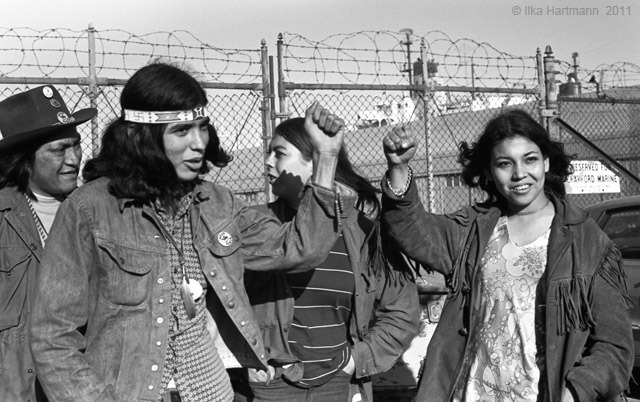
Credit: Ilka Hartmann
Alcatraz Island


On November 20, 1969, a ragtag group of Indigenous activists landed on Alcatraz Island in San Francisco Bay. Claiming the island on behalf of “Indians of All Tribes,” they occupied the former federal prison for 19 months. Protesting the government’s mistreatment of Native people — including a policy known as termination that took tribes’ land and attempted to eliminate their sovereign status — the activists moved into buildings that had housed prison wardens and guards, claimed Alcatraz for all Native nations and redecorated the place with Native art and political statements. One prominent slogan scrawled on the water tower read: “Peace and Freedom. Welcome. Home of the Free Indian Land.”
Richard Oakes, a Mohawk student, ironworker and leader of the group, said of the movement: “Alcatraz is not an island. It’s an idea.” Just as the Statue of Liberty, a symbol of this nation’s immigrant roots, greeted new arrivals in New York, ships entering the Golden Gate would, in Oakes’ and the Occupiers’ vision, encounter Alcatraz reclaimed as a symbol of Indigenous self-determination.
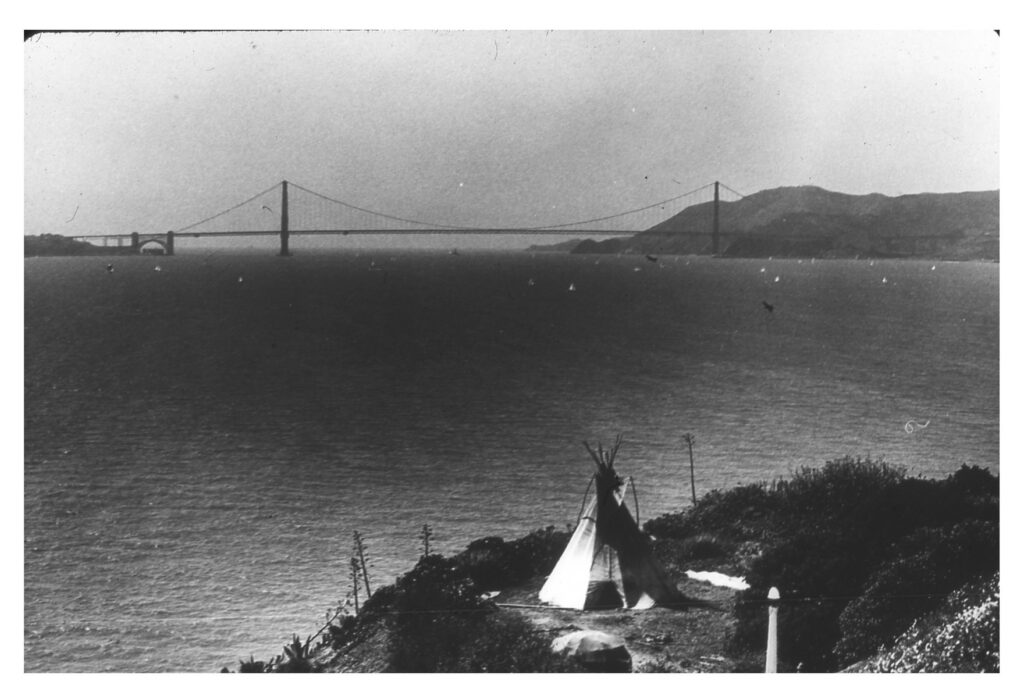
The activists’ demand for the deed to Alcatraz Island wasn’t met, and today the island is part of the Golden Gate National Recreation Area. But through their protest, the Indians of All Tribes forced the government to pay attention to the plight of Native people. By the time the Occupation was over, President Richard Nixon had called for a new policy of “self-determination without termination.” That Alcatraz idea endures to this day.
Two years after the Alcatraz Occupation ended, the American Indian Movement used similar tactics at the village of Wounded Knee, the site of an 1890 massacre of Lakota people by the United States Cavalry, on the Pine Ridge reservation in South Dakota. Like Alcatraz, Wounded Knee marked a turning point for Native people and the nation, instilling pride in a people laid low by colonization and changing the way lawmakers saw and dealt with Native Americans. That era of Indigenous resurgence, of greater mind paid to Native rights and treaties by the government, and of the cultural, political, and spiritual reemergence of Native peoples in our homelands persists.
Yet, to this day, this essential history is largely overlooked. Over 1.4 million people flock to Alcatraz every year to peer inside jail cells that once held notorious criminals like Robert Stroud (the Birdman) and Al Capone. At nearby Fisherman’s Wharf, vendors hawk shirts emblazoned with the austere silhouette of the penitentiary alongside refrigerator magnets and memorabilia celebrating the lawmen and gangsters who made the island infamous. Even in the diverse and progressive Bay Area, the Indians of All Tribes and their Occupation are often forgotten. Meanwhile, Alcatraz has returned as a potent symbol of American authority and incarceration. The current president has even suggested the former federal prison be re-opened.
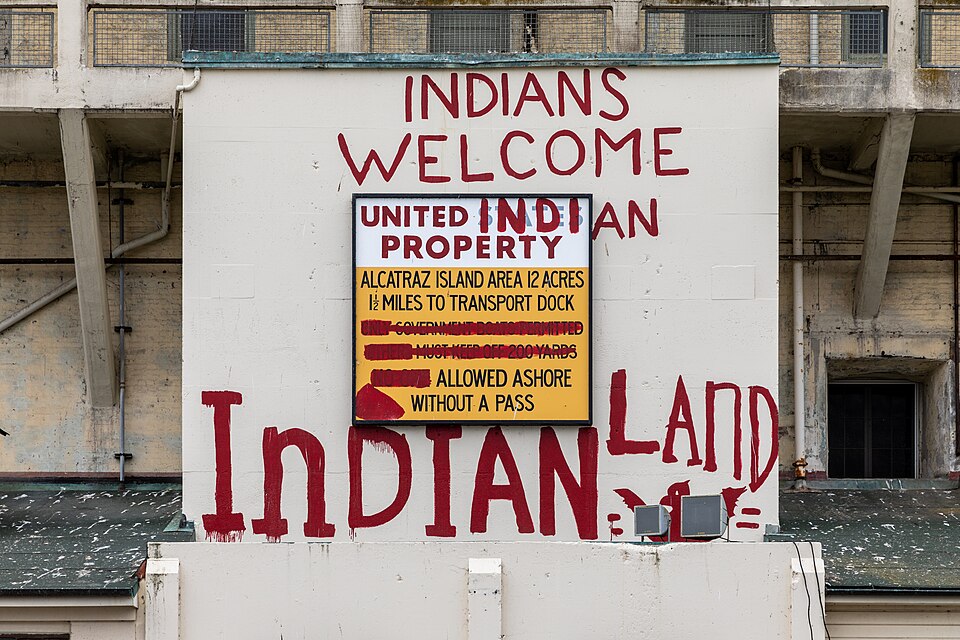
But that is not the only Alcatraz idea. On November 20, 2019, the fiftieth anniversary of the start of the Alcatraz Occupation, Occupation veterans like Eloy Martinez and Dr. LaNada War Jack repainted vivid red letters atop the United States Penitentiary sign that welcomes visitors as they step onto the island from the dock. That sign now reads, as it did during the Occupation:
INDIANS WELCOME
UNITED STATES INDIAN
PROPERTY
ALCATRAZ ISLAND AREA 12 ACRES
1 ½ MILES TO TRANSPORT DOCK
ONLY GOVERNMENT BOATS PERMITTED
OTHERS MUST KEEP OFF 200 YARDS
NO ONE ALLOWED ASHORE
WITHOUT A PASS
INDIAN LAND
Because Alcatraz has never been just an island. No, Alcatraz has always been an idea.
This text contains excerpts from “Alcatraz Is an Idea,” first published in the San Francisco Museum of Modern Art’s Open Space, Issue #13 (December 2, 2019), “Alcatraz Is an Idea,” revised for publication on December 6, 2024, and “Why Alcatraz Matters to Native Americans,” originally published in The New York Times (November 20, 2019), with permission from the author.
- National Park Service | Native American Occupations of Alcatraz
- PBS Video | The Occupation of Alcatraz Island
- American Archive of Public Broadcasting | Radio Free Alcatraz Episode, Hosted by John Trudell (1969)
- Open Space | Alcatraz Is Not An Island
- Video | The Takeover Of Alcatraz 1969, Indians of All Tribes Documentary
- Audio | The Voices of Alcatraz, National Parks Service