Bad River


The Bad River Band of the Lake Superior Tribe of Chippewa Indians is located on the south shore of Lake Superior, the world’s largest freshwater lake, which contains 10 percent of all liquid surface freshwater on Earth. 1Mike Schira and Rob Wiener, “Lake Superior is much more than simply a big body of water, it is an ecological engine,” Michigan State University, June 4, 2018. The Band is named after the Bad River, which flows into the lake.
The Bad River, from the French Rivière Mauvaise, is known in the Ojibwe (Chippewa) language as Mashkiiziibii (Medicine River). The northern Wisconsin reservation is known as a stronghold of Ojibwe lifeways, including the Midewiwin (Grand Medicine Society) faith, and the tribal gathering of sacred manoomin (wild rice grown in lakes and wetlands).
The 1854 Treaty of LaPointe, signed on sacred Madeline Island, guaranteed tribal fishing, hunting, and gathering rights. After the 1983 Voigt Decision reaffirmed Ojibwe treaty rights, Bad River became a center of the revival of springtime walleye and musky spearfishing, and the Great Lakes Indian Fish and Wildlife Commission (GLIFWC) established its headquarters in the reservation capital of Odanah.
The 10,000-acre Kakagon and Bad River Sloughs, often called the “Everglades of the North,” were internationally recognized in 2012 as a “Wetland of International Importance,” because “the diversity of wetland types in the Sloughs complex lends to its unique and rare features, such as vast beds of wild rice (manoomin), spawning habitat for lake sturgeon, and stopover habitat for numerous migratory birds. Comprising a significant portion of the remaining Lake Superior coastal wetlands,” the sloughs are “critical to supporting the biodiversity of Lake Superior fisheries.”2Bad River Tribe, “Kakagon and Bad River Sloughs recognized as a Wetland of International Importance,” BadRiver-nsn.gov, April 5, 2012.
The low-lying slough wetlands are also vulnerable to flooding (which has worsened with climate change), and contamination from extraction and shipping associated with the mining and fossil fuel industries. In 1996, Anishinabe Ogitchidaa (Ojibwe Warriors) blockaded railroad tracks across the reservation, to halt train shipments of sulfuric acid to the White Mine copper mine in Michigan, out of concern of an acid spill on degraded rail tracks.3Zoltán Grossman, “Chippewa Train Blockade Upsets Mining Plans,” The Progressive, October 1996. The successful blockade led to the closure of the mine.4People of the Seventh Fire, “Anishinabe Ogitchidaa,” SeventhFireBlog.wordpress.com, 1996.
In 2011, a Florida company planned to dig an open-pit iron-ore mine in the Penokee Mountains (or Gogebic Range) which would have been the largest mine in Wisconsin history.5Al Gedicks, “The Fight Against Wisconsin’s Iron Mine,” Wisconsin Resources Protection Council, April 16, 2013. Opponents feared that asbestos and sulfide pollution would flow downstream from the mine site to the Bad River, wild rice sloughs, and Lake Superior.6Save the Water’s Edge, “Site Map,” SaveTheWatersEdge.org, 2021. By 2015, a strong alliance of Bad River Ojibwe and their non-Native neighbor stymied plans for the mine.7Zoltán Grossman, Unlikely Alliances: Native Nations and White Communities Join to Defend Rural Lands (Seattle: University of Washington Press, 2017), 257-267.
The Canadian company Enbridge has operated the Line 5 pipeline across a 12-mile segment of the Bad River Reservation since 1953, now transporting up to 23 million gallons a day of oil and liquified gas from the Alberta Tar Sands. A series of easements expired in 2013, so the Bad River Tribe then sued the company for “trespassing,” and for endangering it with an old pipeline crossing eroded riverbanks.8Native American Rights Fund (NARF), “Tribal Nations Stand with Bad River Band to Eject Enbridge from Reservation.” NARF.org, 2024. In 2022, a federal court ordered the company to compensate the Tribe for the trespass, but did not remove the pipeline.9Mary Annette Pember, “Judge orders ‘trespassing’ Enbridge to pay Bad River,” Indian Country Today, September 9, 2022. Enbridge then applied to build a 41-mile pipeline reroute around the reservation, which would still endanger the waterways and sloughs. A state court approved the permit in 2026, and the Tribe filed for a review of the decision.10Timna Axel, “Bad River Band Asks Wisconsin Court to Review Line 5 Permit Decision,” Earthjustice, February 20, 2026.
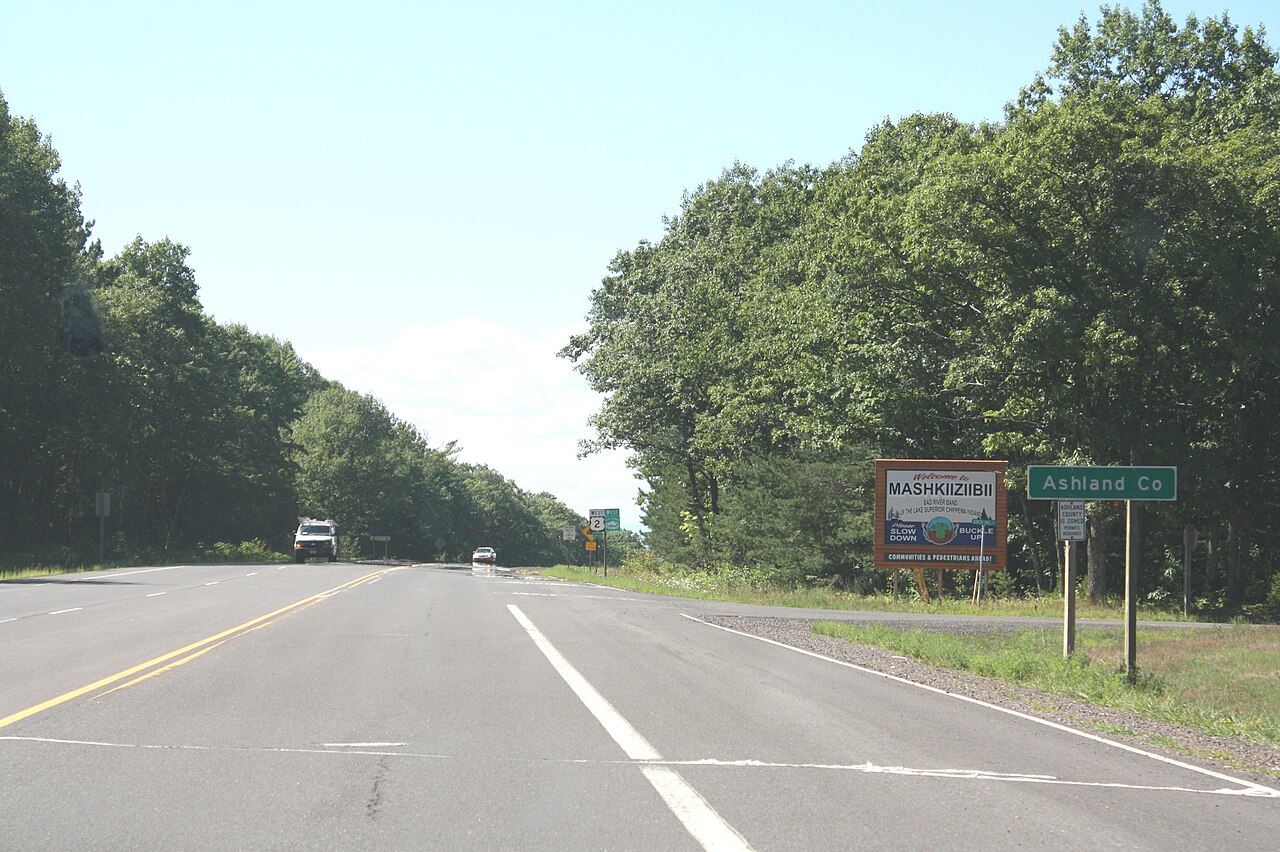
The Tribe’s battles to protect its waters have strengthened its determination to revitalize its culture, food sovereignty, and language. The Bad River tribal government is increasingly using “Mashkiiziibii” to identify the reservation, on its website, tribal license plate, reservation signage, and the formal name of the tribal natural resources department. The name reflects a larger process of Indigenization among the Ojibwe Anishinaabe, who have a population of about 320,000, making them one of the largest Indigenous peoples in the U.S. and Canada.
Footnotes
- 1Mike Schira and Rob Wiener, “Lake Superior is much more than simply a big body of water, it is an ecological engine,” Michigan State University, June 4, 2018.
- 2Bad River Tribe, “Kakagon and Bad River Sloughs recognized as a Wetland of International Importance,” BadRiver-nsn.gov, April 5, 2012.
- 3Zoltán Grossman, “Chippewa Train Blockade Upsets Mining Plans,” The Progressive, October 1996.
- 4People of the Seventh Fire, “Anishinabe Ogitchidaa,” SeventhFireBlog.wordpress.com, 1996.
- 5Al Gedicks, “The Fight Against Wisconsin’s Iron Mine,” Wisconsin Resources Protection Council, April 16, 2013.
- 6Save the Water’s Edge, “Site Map,” SaveTheWatersEdge.org, 2021.
- 7Zoltán Grossman, Unlikely Alliances: Native Nations and White Communities Join to Defend Rural Lands (Seattle: University of Washington Press, 2017), 257-267.
- 8Native American Rights Fund (NARF), “Tribal Nations Stand with Bad River Band to Eject Enbridge from Reservation.” NARF.org, 2024.
- 9Mary Annette Pember, “Judge orders ‘trespassing’ Enbridge to pay Bad River,” Indian Country Today, September 9, 2022.
- 10Timna Axel, “Bad River Band Asks Wisconsin Court to Review Line 5 Permit Decision,” Earthjustice, February 20, 2026.