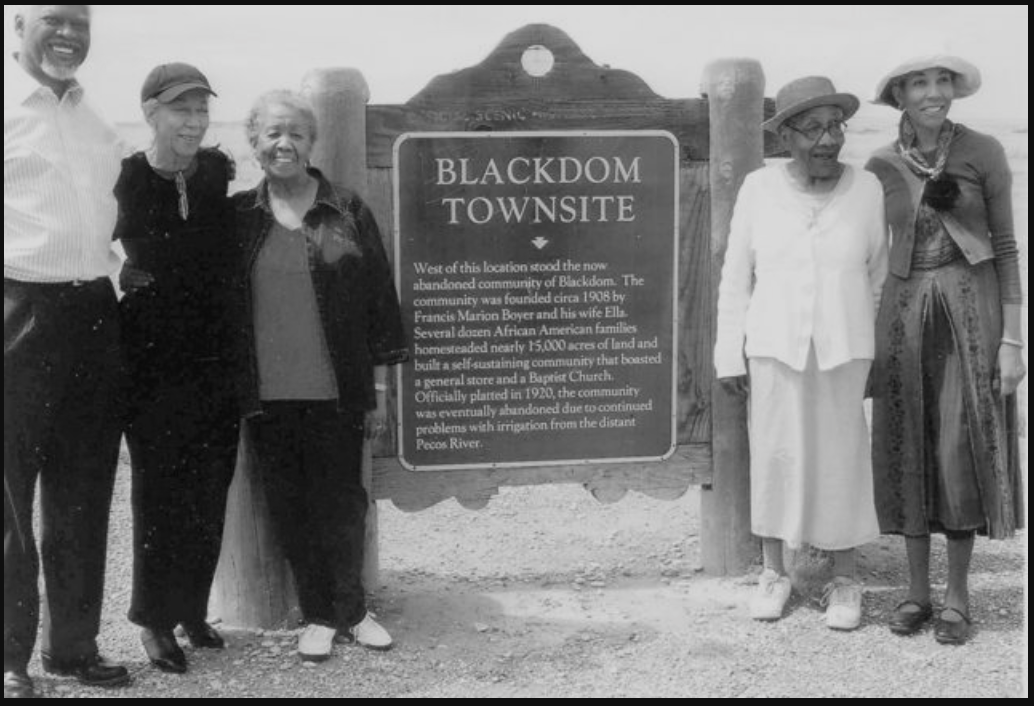
Blackdom


Naming the Domain: Blackdom, New Mexico, and the Concentric Clanship Networks of Freedom Colonies
Blackdom Was Not a Place That Failed. It Was a Name for a Future.
Blackdom. Not a saint’s name. Not a creek, a county seat, or a rancher’s surname stamped onto a territorial survey. A declaration. A Black domain. In 1903, Francis “Frank” Marion Boyer, Ella Louise McGruder Boyer, and 12 other African American homesteaders established the Blackdom Townsite Company in Chaves County, New Mexico Territory. They pooled $10,000 in combined assets and named Boyer president. Seven years earlier, Frank had walked from Georgia to the Pecos Valley with two of his students, carrying a directive passed down by his father, Henry—a freedman who had served as a wagoner with Stephen W. Kearny’s army during the Mexican-American War and had seen New Mexico’s open land with his own eyes. Find land. Build something. Hold it.
They did. Like his father, Frank was an alum of Morehouse College in Georgia, and also of Fisk University in Tennessee. Ella was an alum of the Haines Institute in Georgia. Both were teachers before they were homesteaders, and they made education the spine of the community they built—a school, a church, a Masonic lodge, a post office (opened in 1912), a store, and eventually an oil company.
By 1929, Blackdom’s residents held federal patents on 64 homestead claims totaling 13,056 acres. Prominent families—the Clippers, Collins, Eubanks, Herrons, Proffits, Smiths and Wilsons—were intertwined through kinship and marriage. When drought and falling commodity prices squeezed the community in the 1920s, the settlers pooled their mineral rights into the Blackdom Oil Company, negotiating a contract for 4,200 acres with the National Exploration Company worth up to $70,000. When the wells came up dry and the post office closed, the Boyers did not scatter. In 1920, they led six wagonloads southwest to the Rio Grande Valley and established a new community at Vado, welcoming 40-60 additional Black families over the next two decades.
Blackdom is often described as a ghost town. But “ghost town” flattens a Black political project into an abandoned curiosity. Blackdom did not simply vanish. Its people moved, organized, founded Vado, and left behind land papers, descendants, and claims that survive today.
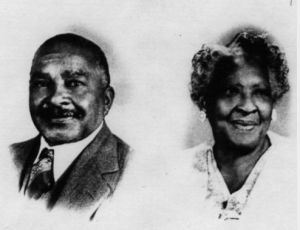 Francis Marion and his wife Ella Louise (McGruder) Boyer, founders of the Blackdom community. Credit: National Park Service
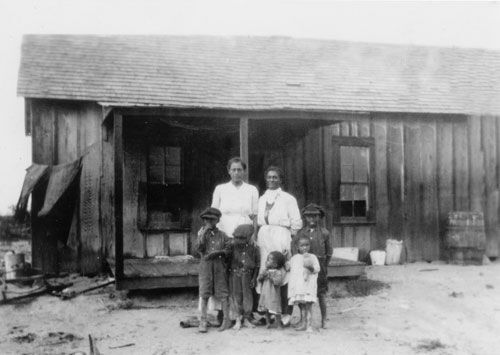
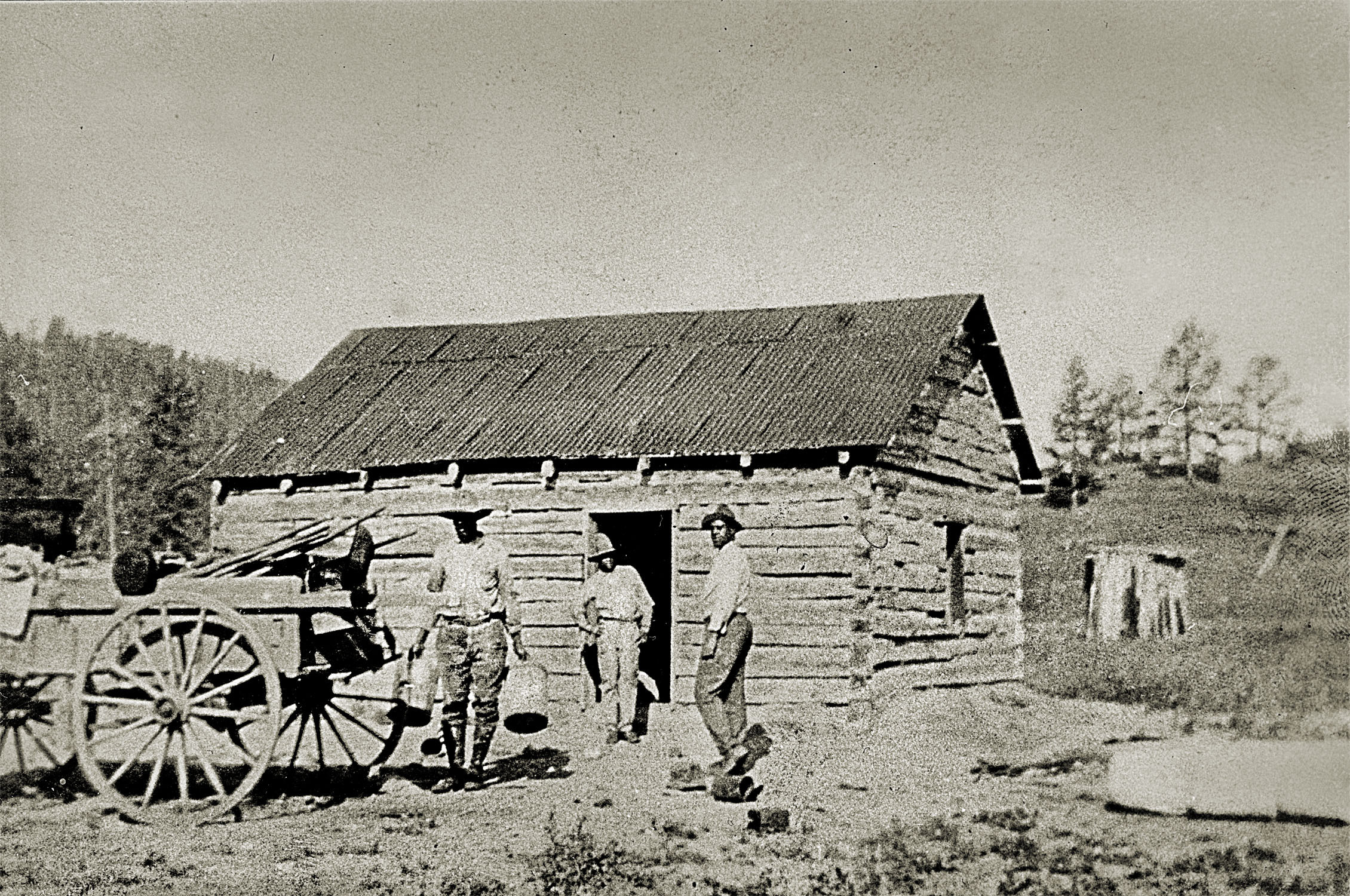
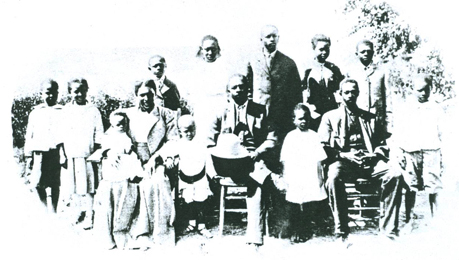
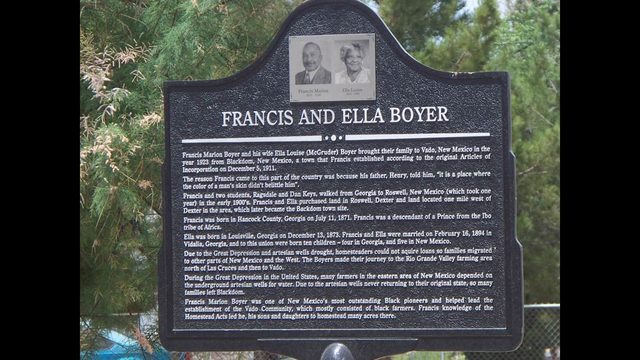
To tell Blackdom’s story as one desert settlement that dried up is to miss what it actually was: one node in a continental network of Black landed kinship. Across the post-Emancipation United States, educated Black families—teachers, ministers, lawyers, Freemasons, postmasters—acquired land under the Homestead Acts and built self-governing communities connected through migration, marriage, educational pipelines, church circuits, and correspondence. Isaiah Montgomery, born enslaved on Joseph Davis’s Mississippi plantation, co-founded Mound Bayou in 1887. Edward P. McCabe, the first Black state auditor in Kansas, founded Langston, Oklahoma in 1890. Similar kinship-and-land strategies anchored Black communities from Shankleville and Elam Springs in Texas to River Road in Maryland, Piney Swamp in Virginia, and Hillside in North Carolina—communities where family, marriage, church, land, and migration often worked together across generations.
They formed nested kinship networks: founding households surrounded by extended blood families who took up adjoining claims, then families joined by marriage within the community, then migrations and institutions that linked Black towns. Together, they constituted a landholding Black leadership class whose authority rested on education, property, kinship, churches, schools, lodges, and local office. They used land itself defensively: patents, fee-simple titles, mineral rights, wills, and family papers became tools for holding ground against the partition sales and tax forfeitures that stripped so much Black-owned land away.
At a moment when public history is being narrowed, sanitized, and stripped from official landscapes, Blackdom asks us to remember that Black people did not only flee racial terror. They named, mapped, financed, governed, taught, worshiped, leased, and planned futures on land they meant to hold—including land made available through federal homesteading regimes that had already dispossessed Indigenous peoples.
The empty plain 15 miles south of Roswell is not the absence of a place. It is the trace of a political geography whose descendants still live and whose land papers still exist. Today, recovering Blackdom means supporting descendant memory work, protecting surviving records, marking the landscape responsibly, and refusing the language of “ghost town” when families and claims remain.
Mapping Blackdom means returning to the official record a name that was never a curiosity, never a footnote. Blackdom was a counter-cartographic claim inscribed onto the land by people who understood that naming a place is an act of sovereignty. Putting it back on the map is an act of repair.
- National Park Service | Blackdom, New Mexico
- Book | Blackdom, New Mexico: The Significance of the Afro-Frontier, 1900–1930
- Website | The Texas Freedom Colonies Project
- National Park Service | Vado, New Mexico
- Santa Fe New Mexican | 'Back to Blackdom' documentary tells story of New Mexico's first all-Black settlement