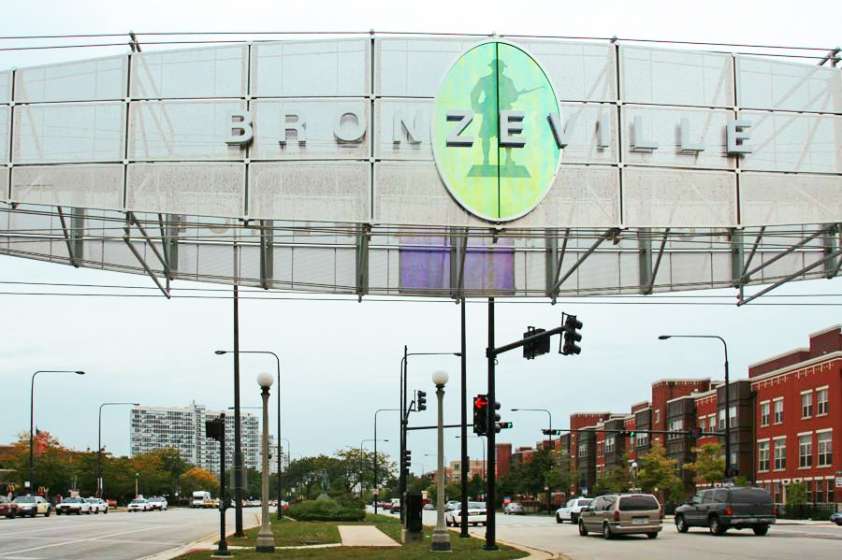
Bronzeville


The Bronzeville Black Metropolis National Heritage Area is located on Chicago’s South Side, in the community known as Bronzeville. The origin of the name is a positive reaction to some of the derisive names attributed to a Black, segregated community. It refers to the skin color of the people who lived there and worked to overcome stereotypes, prejudice, and lack of opportunities. It represents the resilience of a people who had to escape the Jim Crow South, but still found barriers even in the “Promise Land” of the North.
The Great Migration marked a transformative period by 1910, raising the Black population in Chicago to an estimated 30,000–40,000 (less than 5 percent of the city’s population). The White population demonstrated high residential mobility, while the growing Black community faced severe restrictions. It was largely confined to the South Side Black Belt, a small area annexed in 1870 that became a migration destination. This 30-block region along State Street housed about 80 percent of the city’s total Black population, quickly becoming a densely populated center for Black culture and community life.
Discriminatory practices such as restrictive covenants and redlining reinforced the socioeconomic divides that defined the Black Belt. By the mid-1920s, the Great Migration was in full swing, driving millions of Black Southerners to the urban North. The Near South Side of Chicago became a cultural and economic hub for these migrants, earning the nickname “Bronzeville” and being celebrated as the “Black Metropolis” due to its growing stability, entrepreneurship, and political activism.
Key institutions developed rapidly:
- Provident Hospital (1891): Founded as the nation’s first Black-run, integrated hospital, it was supported by both Black Chicagoans and wealthy White businessmen (like George Pullman). It became predominantly Black due to segregation by the early 1910s.
- The Chicago Defender (1905): Founded by Robert Sengstacke Abbot, this Black-owned newspaper was a powerful advocate for racial equality. It vividly portrayed the violence of Jim Crow and instrumentalized illustrations to promote Chicago as a refuge for Black Southerners.
- Binga Bank (1908): Entrepreneur Jesse Binga, who established a successful real estate business in 1902, founded Chicago’s first Black-owned bank. Despite his success and role as a “harbinger of integration,” the bank was ultimately lost to the Great Depression.
The success of Black businessmen like Binga spurred new construction. The Wabash Avenue YMCA was built in 1911-13 with financial aid from Sears chairman Julius Rosenwald. It provided crucial job and skills training and served as a vital community gathering place.
In addition to entrepreneurship, enhancing the community was the culture that came to Chicago during the Great Migration. There was music—jazz, blues, and Gospel, brought by musicians from the South. They performed in night clubs along the “Stroll,” as State Street was called, and in other venues, including the Regal Theater, Savoy Ballroom, and the Forum.
Churches served as crucial anchors. During the Great Migration, Olivet Baptist Church (1861) became the largest African American church. Roberts Temple Church of God in Christ (1916) is remembered for hosting the open-casket funeral of Emmett Till. Quinn Chapel (1891), whose original site was an Underground Railroad stop, was rebuilt after the Great Fire of 1871. Pilgrim Baptist Church (1890), originally a synagogue designed by Louis Sullivan, became known as the birthplace of gospel music by the 1930s.
The Black artistic and intellectual community thrived before and after the Great Depression.
- Ida B. Wells-Barnett: Her three-decade career focused on anti-lynching and anti- segregation activism, making her a forerunner of the Civil Rights movement. She also co-founded the Negro Fellowship League, a settlement house that assisted Black newcomers in response to the segregated YMCA.
- Richard Wright: After moving to Chicago, he established the South Side Writers Group in the 1930s. His novel Native Son (1940) became a landmark work.
- Horace R. Cayton, Jr.: He co-authored Black Metropolis: A Study of Negro Life in a Northern City, which provided a seminal examination of the Black experience in Chicago.
- Gwendolyn Brooks: A prominent contributor to the Chicago Defender, her poetry collection A Street in Bronzeville (1945), followed by Annie Allen (1949), led her to become the first African American to win a Pulitzer Prize.
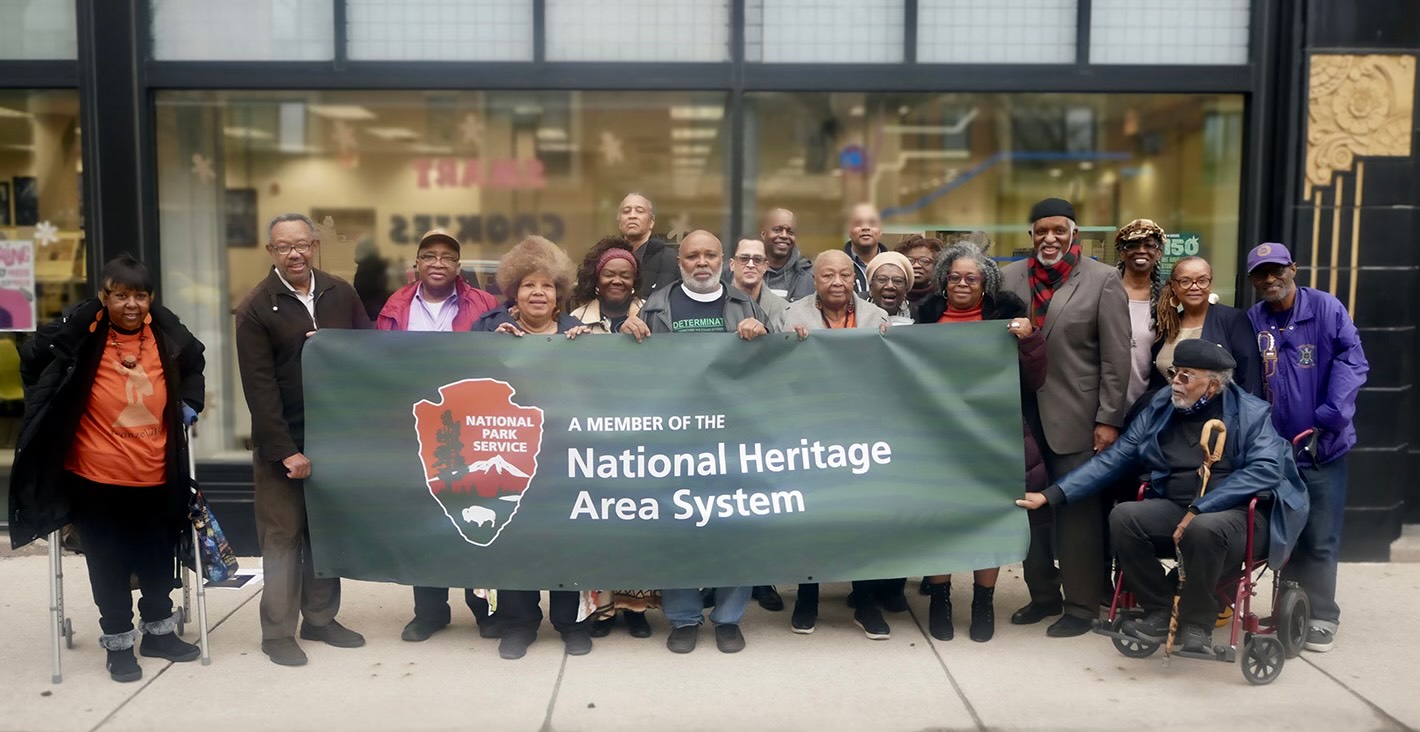 Celebrating the National Heritage Area Designation. Credit: Bernard Turner.
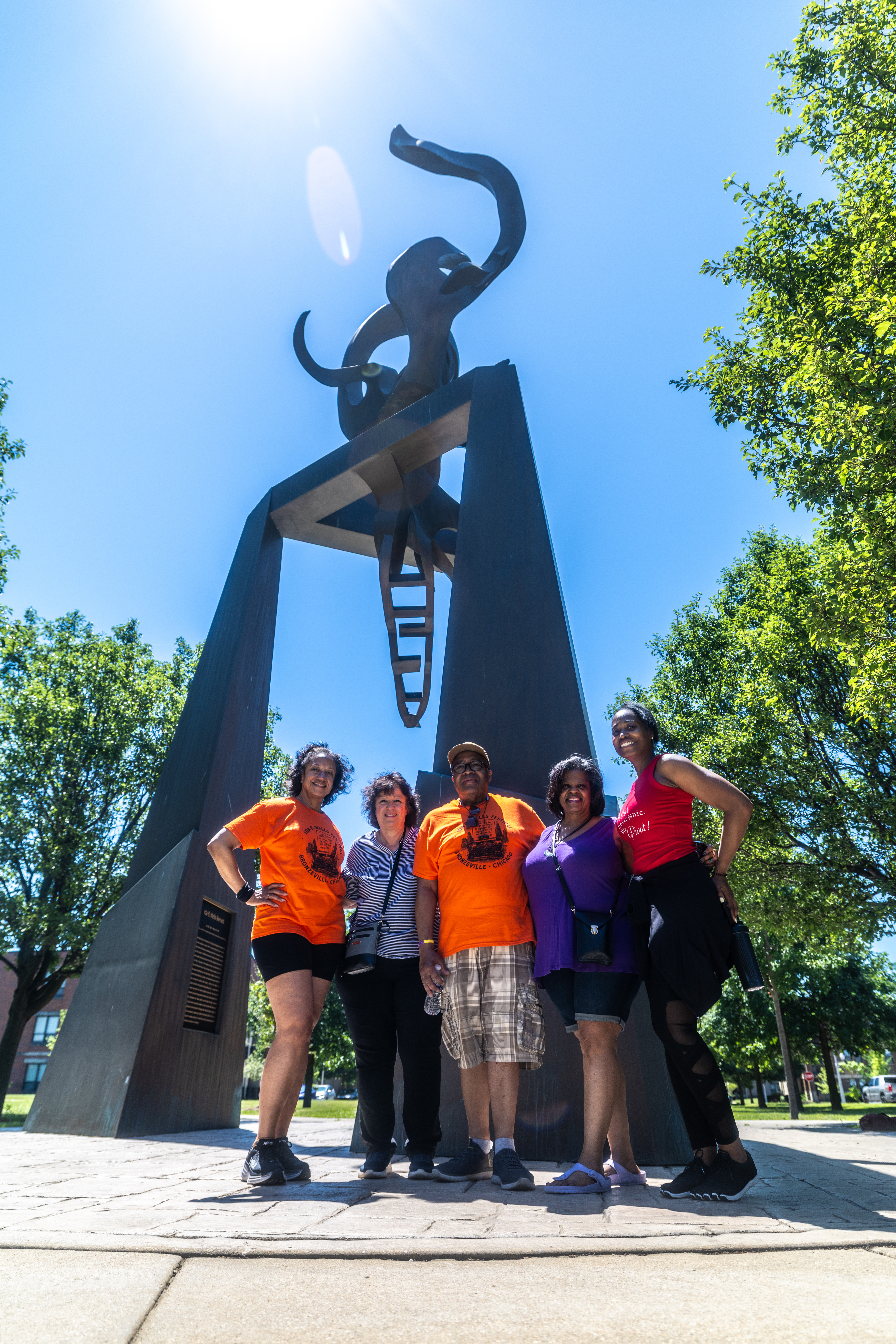
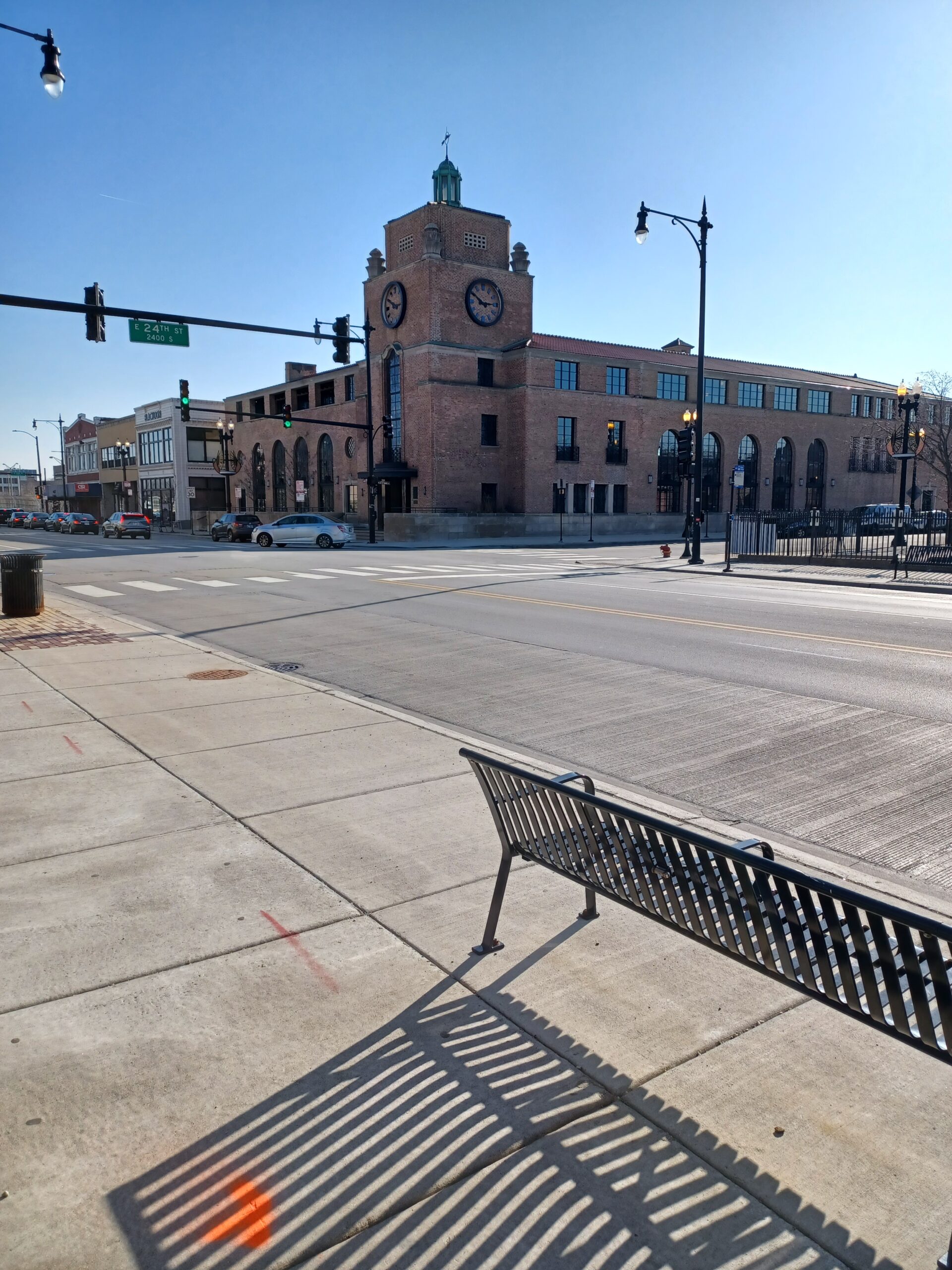
All of these factors and the preservation efforts of the people who lived in Bronzeville contributed to the community being designated as a National Heritage Area in 2023. Bronzeville is destined to stay vibrant and grow while maintaining the culture and providing the models and knowledge for the next generation.