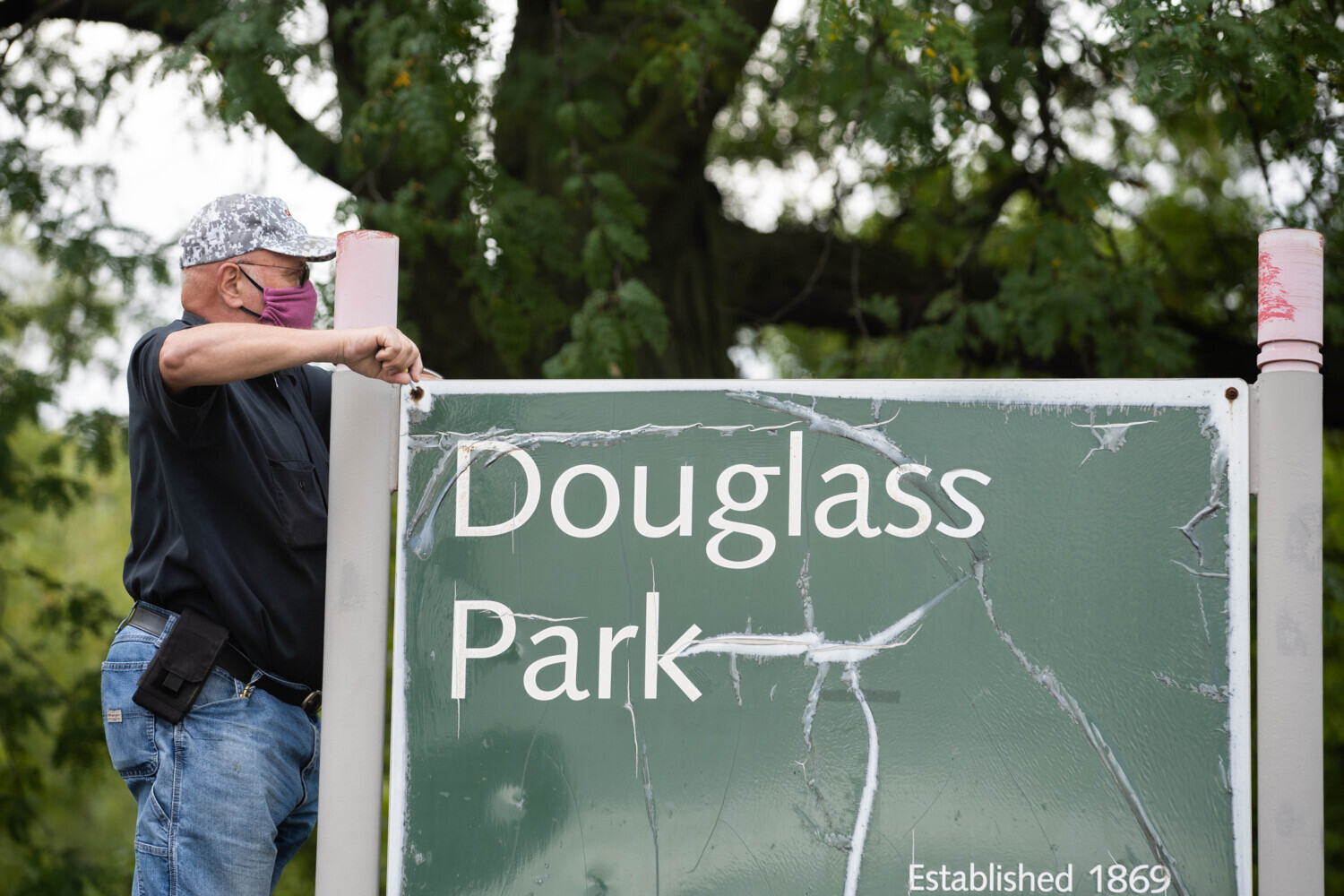
Douglass Park

In July 2020, the City of Chicago’s Park District changed the name of Douglas Park to Douglass Park. This seemingly minor change, adding a single “s” to one of the city’s most prominent parks, revealed a far more consequential reality.
In 1869, the Illinois-appointed West Park Commission named one of Chicago’s largest green spaces, ultimately 162 acres, after Stephen A. Douglas (1813-1861). Douglas was a nationally significant U.S. Senator who helped bring the Illinois Central Railroad to Chicago, where he lived.
Stephen Douglas probably is best known for a series of debates against future U.S. President Abraham Lincoln in 1858. The main topic in those debates was slavery, with Lincoln railing against it and Douglas defending the practice. Not coincidentally—albeit far less well known—Douglas’s wife came from a prominent Mississippi planter family whose wealth was derived from more than a hundred enslaved African Americans.
Douglas Park, along with Chicago’s other 19th-century crown-jewel parks, Garfield and Humboldt, were designed by William Le Baron Jenney. In the early 1900s, prominent landscape architect Jens Jensen made improvements and additions. In 1934, Douglas Park was added to the Chicago Park District and is considered one of its finest.
In May 2020, a white police officer in Minneapolis murdered George Floyd, an African American. This event was captured on a bystander’s phone and, after being posted to the internet, went viral on a scale rarely seen. The shocking, horrific crime sent shockwaves across the United States and world, launching the largest protests against racism and police brutality in U.S. history.
Fast forward to 2020, the Chicago Park District Board of Commissioners unanimously voted to remove the name of Stephen Douglas from his namesake park and change it to Douglass Park to honor Anna and Frederick Douglass. Frederick Douglass is the most well-known African American of the 19th century. His wife, Anna Murray Douglass, also was a noted abolitionist, i.e. someone who opposed slavery and advocated for equal rights for Black Americans. Why the change and why then?
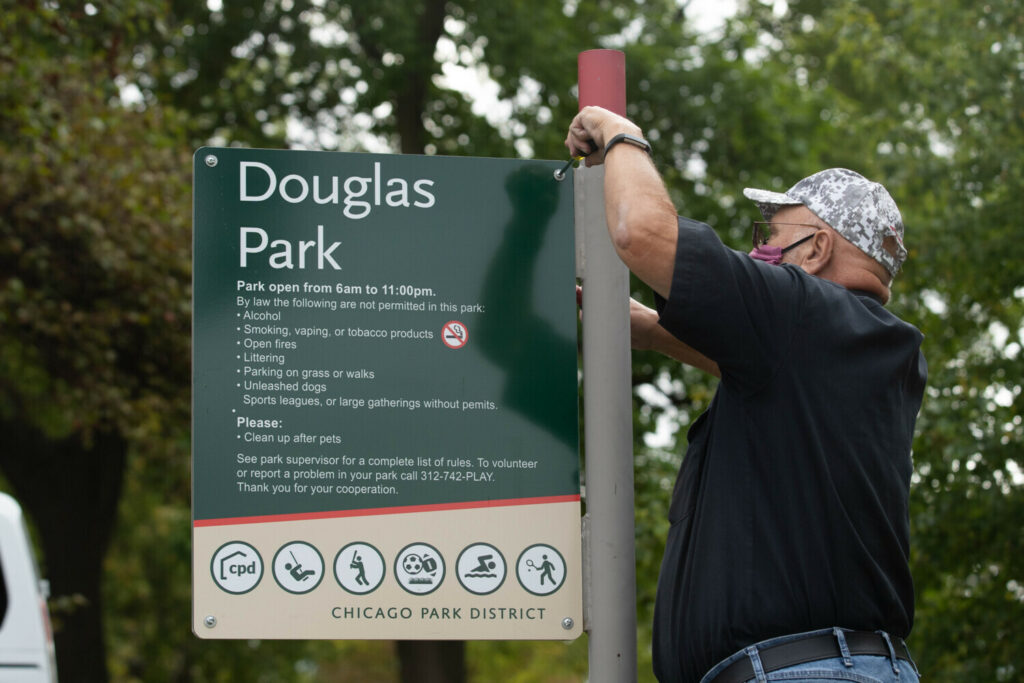
In Chicago and many other communities, people also protested what they believed to be racist and xenophobic monuments and place names. In Chicago, Douglas Park was located in the North Lawndale community, a predominantly African American West side neighborhood where the park’s name was seen as problematic.
In 2017 and again in 2019, students and teachers at the Village Leadership Academy lobbied to change the name of this park because many of its students lived in the North Lawndale neighborhood. They argued that more than 90 percent of North Lawndale residents are African Americans, yet Douglas was a white man who defended slavery and enriched himself by marrying into a wealthy family of Mississippi enslavers. Therefore, they proposed that it should be renamed.
Born into slavery in Maryland in 1838, Frederick Douglass freed himself from slavery. His widely read Narrative of the Life of Frederick Douglass, an American Slave, published in 1845, described the horrors of slavery. He later wrote for an abolitionist newspaper, The Liberator, and founded The North Star. Along with his legendary speaking abilities, Douglass became America’s most prominent opponent of slavery.
Anna Murray was born a “free black” in Baltimore and raised by parents formerly enslaved. She helped Frederick, financially and otherwise, to escape. Soon after, they reunited in New York, where they married though later moved to New Bedford, Massachusetts. While her husband traveled throughout the North and overseas to promote abolition, she raised their five children and provided immeasurable support.
After Floyd’s murder in 2020, millions of Americans started protesting racism and police brutality but, interestingly, they also called for the removal of racist monuments as well as renaming places that honored racists. Protests grew throughout the early summer and, in July 2020, thousands converged in Chicago’s Grant Park to remove a prominent statue of Christopher Columbus, nearly doing so themselves while clashing with police.
Students and teachers at Village Leadership Academy—now called It Takes A Village Leadership Academy—had been organizing to rename Douglas Park since 2017 and even had gathered thousands of signatures to rename the park. However, the Chicago Park District Board had ignored them.
But just days after the protests at one of the city’s Columbus statues, the Chicago Park District Board suddenly and without warning voted to change the name of Douglas Park to Douglass (Anna and Frederick) Park. They noted this was the first time it ever had changed the name of a Chicago park that had been named after someone.
The reality of Douglas and Douglass collided on Chicago’s West side in 2020. The fact that neighborhood residents wanted “their” park to better represent them and their values confirmed that the names we choose to give places matters greatly.