Loisaida


I have always been proud of where I come from. As a born-and-raised New Yorker, I belong to a place whose name carries instant recognition the moment it leaves my mouth. It is an identity rooted in a rich history and reinforced by universally understood landmarks: the Statue of Liberty, Madison Square Garden, and Times Square, to name a few.
But the reaction becomes less predictable when people ask the usual follow-up.
“Where in New York?”
“Loisaida.”
“Where?”
“The Lower East Side.”
“The Lower East Side?”
“Yes, Loisaida, the Lower East Side.”
The looks and tones I received in those moments always frustrated me. On one hand, the connection to New York I had just established seemed to weaken. On the other hand, I wondered why my connection to my hometown was being questioned at all, and why I felt a sense of shame, as though I had disappointed them with my response.
Over the years, to avoid that moment of discomfort, I began saying “the East Village.” The East Village brought a sense of reassurance and recognition for many people. Like New York, the East Village called up familiar associations for them: NYU, Tompkins Square Park, or, most often, someone’s favorite restaurant or hangout. The East Village has its own history, but it is not the history of Loisaida.
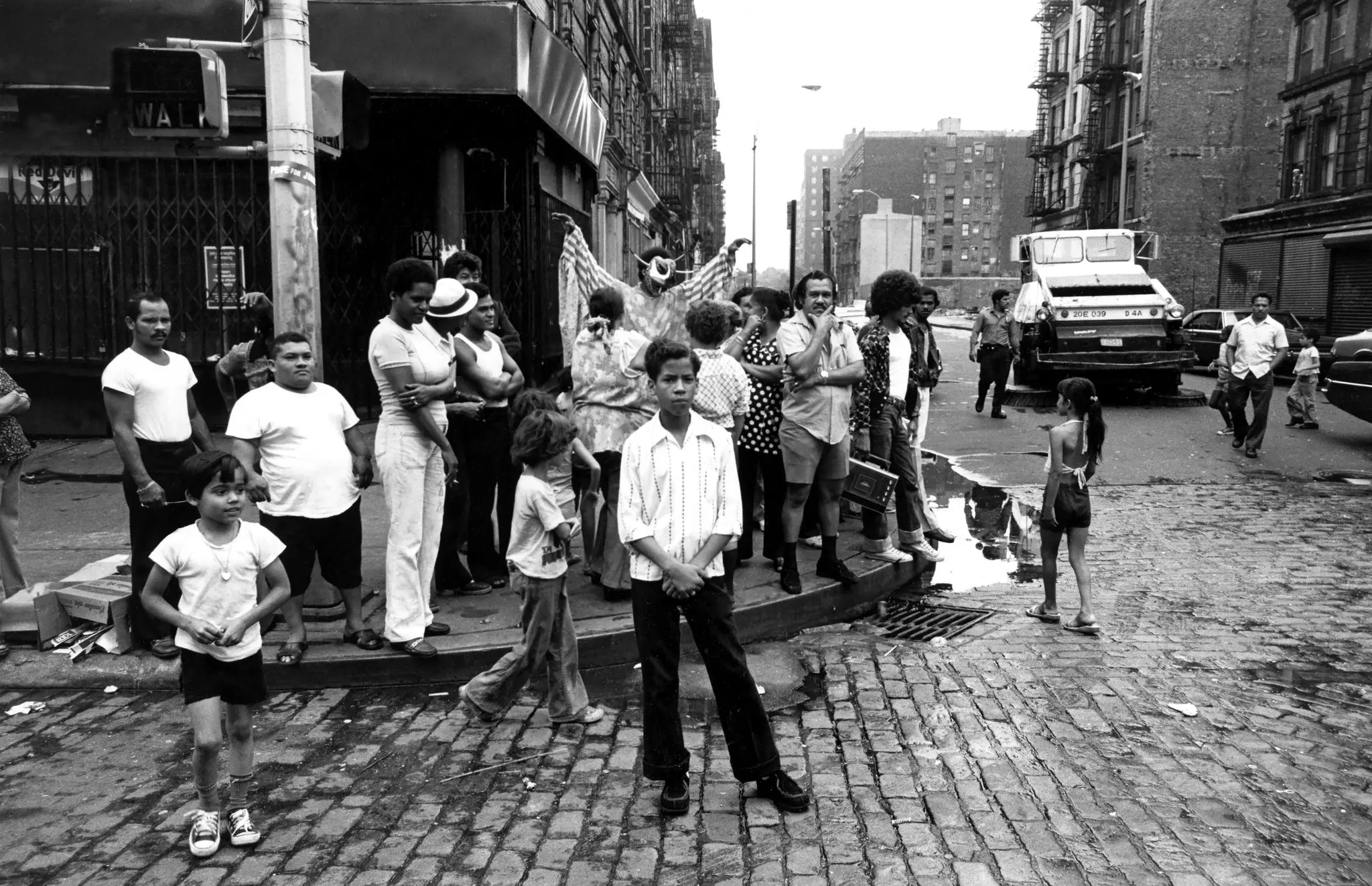
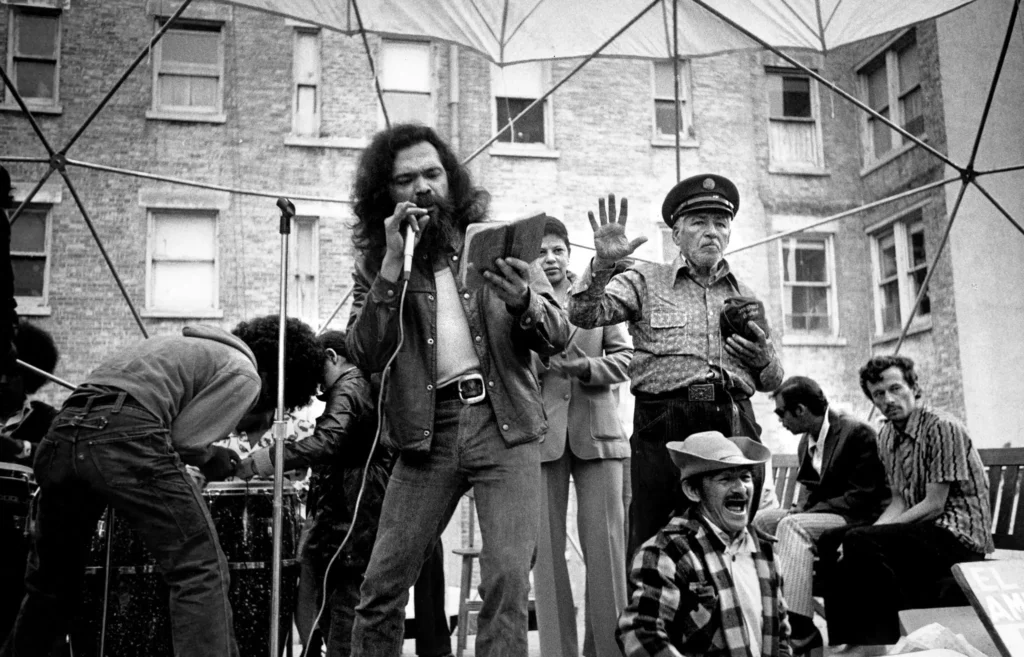
Loisaida is the Latinized name for the Lower East Side of Manhattan, the area between Houston Street and 14th Street to the south and north, and between Avenue A and the East River to the west and east. Within those borders, Loisaida was home to one of the largest Puerto Rican communities in New York during the 1960s and 1970s. Loisaida comes from this community: the word was coined in 1974 by Puerto Rican poet and activist Bimbo Rivas in his poem of the same name. It translates the sound of “Lower East Side” into a Spanglish pronunciation, giving the neighborhood a name rooted in the literal speech and presence of its Puerto Rican residents. The term emerged as organizers and residents sought to claim a neighborhood that the city had begun to leave for dead.
Credit: Maximo Colon
In the 1970s, Loisaida’s physical environment showed the effects of abandonment. After New York City’s fiscal crisis, city leaders reduced services in poor and working-class neighborhoods, a strategy described as “planned shrinkage.” In Loisaida, that meant less support for basic public services, from housing to garbage collection. Landlords neglected buildings, housing deteriorated, and vacant lots grew. Against this backdrop, residents, activists, homesteaders, and garden groups worked to reclaim abandoned buildings, convert vacant lots into community gardens, create cultural spaces, and produce public art.
This alternative notion of power and ownership for community members is best captured in the mural project La Lucha Continua / The Struggle Continues (1985-86) at La Plaza Cultural on 9th Street and Avenue C. Sponsored by Artmakers and the activist organization CHARAS, its central mural depicted images of homelessness, eviction, and demolished housing stock juxtaposed with images of repaired buildings, a community cultural center, workers, and children playing in an open field. It imagined a future built through community labor while also showing that future under threat from gentrification, represented by landlords as a green octopus in a limo.
In the upper right-hand corner of the mural is a geodesic dome. The dome may seem like a small detail, but it carries an important part of Loisaida’s history. From its first appearance in 1972, CHARAS built and cultivated the image of the dome to fit within its programming and ambitions for Loisaida. It is no coincidence that the appearance of the dome corresponded with the mass adoption of the word “Loisaida” throughout the community and the city. At first, the domes were explored as possible alternative housing. Over time, they became educational, cultural, and symbolic structures. They appeared in streets, parks, murals, posters, banners, community events, and local publications. Like the word “Loisaida,” the dome became tied to a community vision of self-determination, local control, and collective labor.
In this way, Loisaida’s history is inseparable from its built environment. The name signals a community’s effort to reclaim, rebuild, and defend a neighborhood under pressure from abandonment, redevelopment, and displacement.
These days, I do not shy away from saying I am from Loisaida. What once brought a feeling of uncertainty is now a point of pride. Saying Loisaida allows me to honor the Puerto Rican, working-class, and community-led histories that shaped the neighborhood and me.
¡Pa’lante!
- Book Review | Timo Schrader's Loisaida as Urban Laboratory: Puerto Rican Community Activism in New York
- Creative Review | New photo book captures the diversity of 1980s New York
- Website | The Loisaida Cultural Archives, The Loisada Center
- Website | CHARAS and The Reimagination of Loisaida
- Website | The Poets & Activists of Loisaida