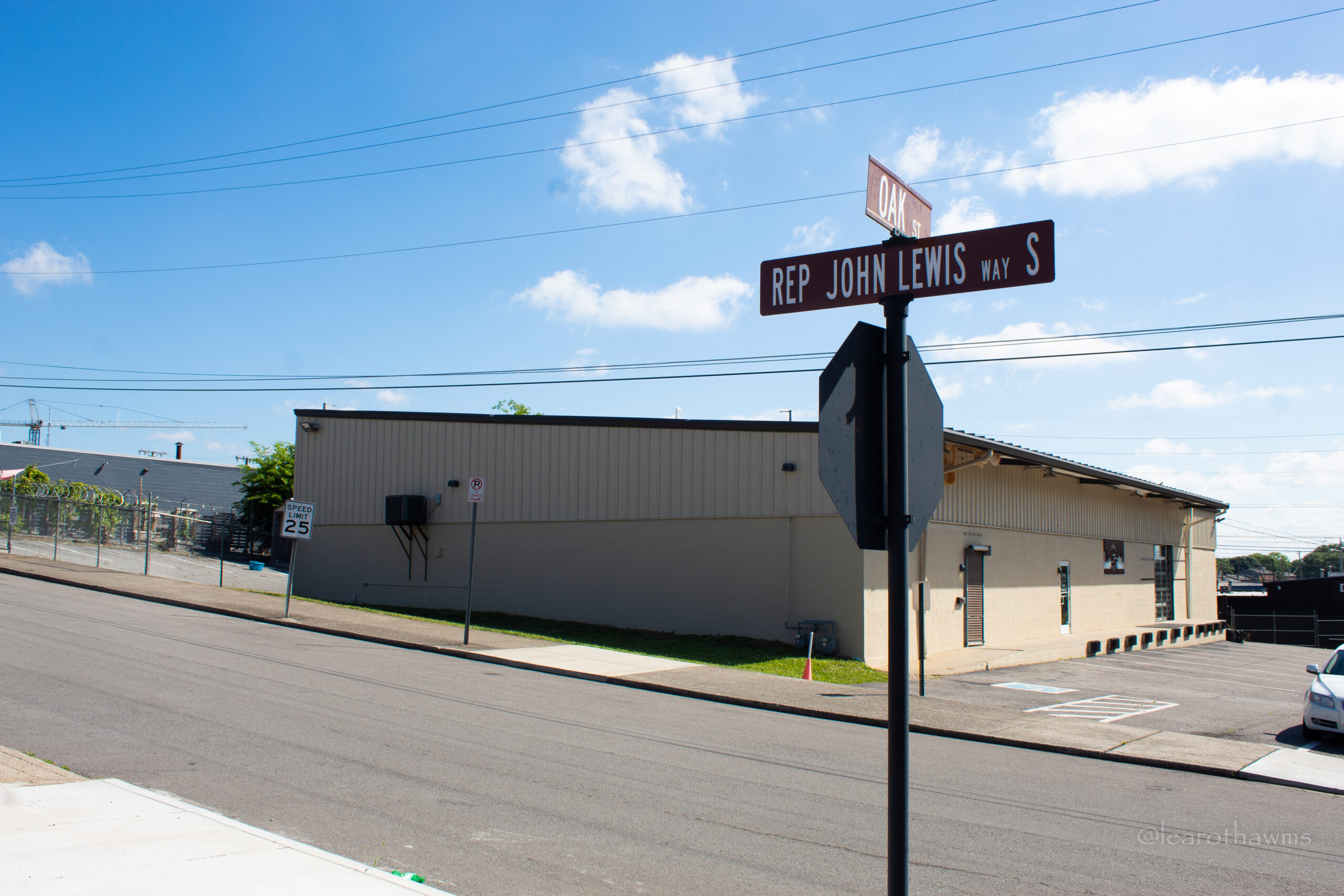
Rep. John Lewis Way

I travel down John Lewis Way twice a week, despite the fact that doing so requires me to ride through the chaos that is Broadway, endure the bottlenecks and intermittent stops caused by construction, and observe tourists who seem to have only gotten their driver’s licenses two weeks earlier and have forgotten basic traffic laws, barely avoiding catastrophic car and pedestrian accidents. But as I drive down John Lewis Way from its beginning near the Old City Cemetery to its end at Martin Luther King Jr. Blvd., I am conscious of how almost every street in the Music City that runs from east to west is touched by the street that bears his name. It is a perfect metaphor for the young man from Troy, Alabama, who came to Nashville to study to become a minister, but he became known as one of the greatest warriors for equality in the 20th century, where he dedicated decades to the struggle for civil rights before serving as a U.S. congressman from 1986 to 2020.
John Lewis Way is a memorial to him and the young people who fought, were beaten, and in some instances lost their lives in an effort to make America better than it had been in the past, indeed, even better than it had ever dreamed it could be. They dreamed of an America and a form of equality that very few of the founders could envision. On January 14, 2021, we claimed this street where Lewis and others confronted white supremacy and stared evil in the face, consecrated it, and transformed it into one of the most visible monuments to freedom in America. You can tell a lot about a place by what it memorializes, celebrates, and omits from its history in its public spaces.
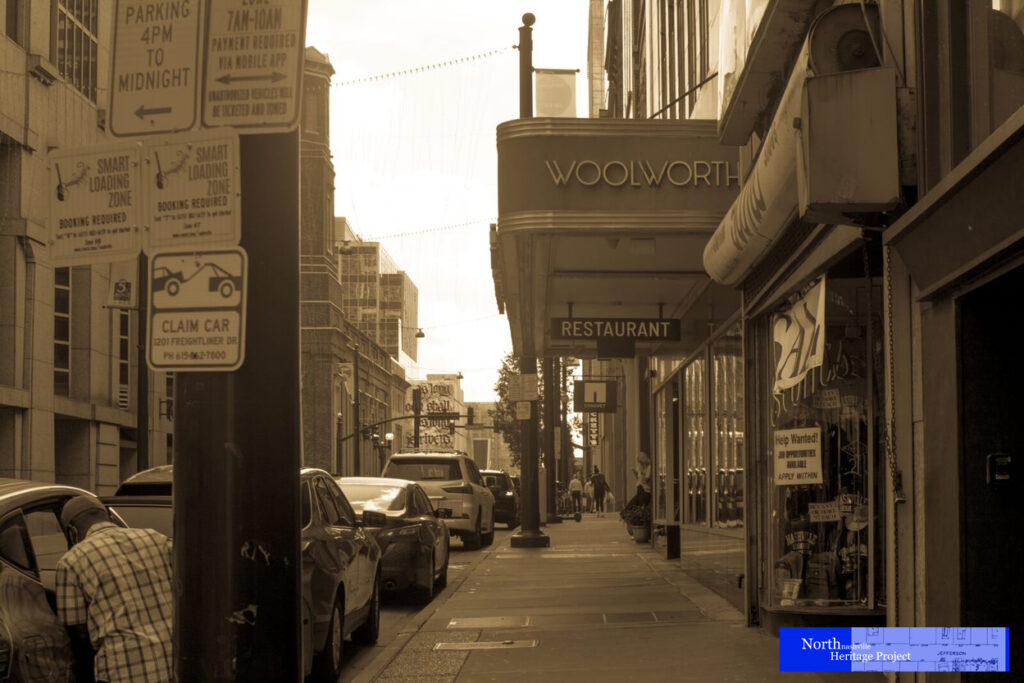
There are disturbing murmurs on the street of a proposal to rename Rep. John Lewis Way to President Donald J. Trump Blvd. Although the street name should enjoy the protection provided by the Tennessee Heritage Protection Act of 2013, we also recognize that laws mean nothing if they are unenforced. The renaming of the street by the children and grandchildren of the people who actively brutalized, bombed, and murdered people of Lewis’s generation is a shameful memorial to the past and directly links them to the actions of their ancestors as they become complicit in cultivating a spirit of forgetfulness in this city. John Lewis fought and risked his life for equality for all American citizens, struggling mightily as a young man for the right of American citizens to vote. His life and legacy have important lessons for us as Americans.
The desire to rename the street after Donald J. Trump requires a level of amnesia that is remarkable even for a state like Tennessee, the last state to secede from the Union, a state with a remarkably high desertion rate among soldiers who fought for the Confederacy, and the birthplace of the Ku Klux Klan. Trump spent the last two months of his first term in office arguing that the votes of people who looked like Lewis in Philadelphia, Milwaukee, and Atlanta were fraudulent and should not count, and instigating events leading to an insurrection in Washington D.C. to prevent the certification of the election. At the time of this writing, Trump has thirty-five federal convictions and has the dubious distinction of being an adjudicated rapist. These thirty-five convictions are exactly thirty-five more than a resident can have and vote in the Volunteer State. Lastly, evidence and the testimony of victims and witnesses provide a strong indication that he is complicit in one of the worst cases of a child sex trafficking conspiracy in American history.
Street names that pay homage to prominent people and events from the past often evoke fond memories, inspire the public, and affirm honorable traits and qualities of individuals who lived among us. It is, in fact, a simple form of knowledge preservation. The fact that this proposal is being floated around the city and other spaces reveals that many of our neighbors, elected officials, and others were never truly committed to the type of equality they argue that the founders created, at least not when it comes to the people to whom John Lewis dedicated his life to serving.
It demonstrates a profound desire to memorialize and preserve white supremacy. President Donald J. Trump Blvd will be the 21st-century equivalent to a “Whites Only” sign that hung in establishments that lined the street during the 1960s. It will be a legacy to the breaking up of families that began with the violent removal of Native American groups who called the area home before American contact, continued where the street intersects MLK Blvd. with slave brokers who bought and sold men, women, and children as chattel, and reemerged in the 21st century with the rounding up of Nashvillians by men too cowardly to show their faces to the world. To be sure, racist violence, bigotry, misogyny, and homophobia have been a prominent part of Nashville’s history, but it is something that should be studied and eschewed, not celebrated by some in this state who seek to vandalize and deface one of the most historic streets in the city.