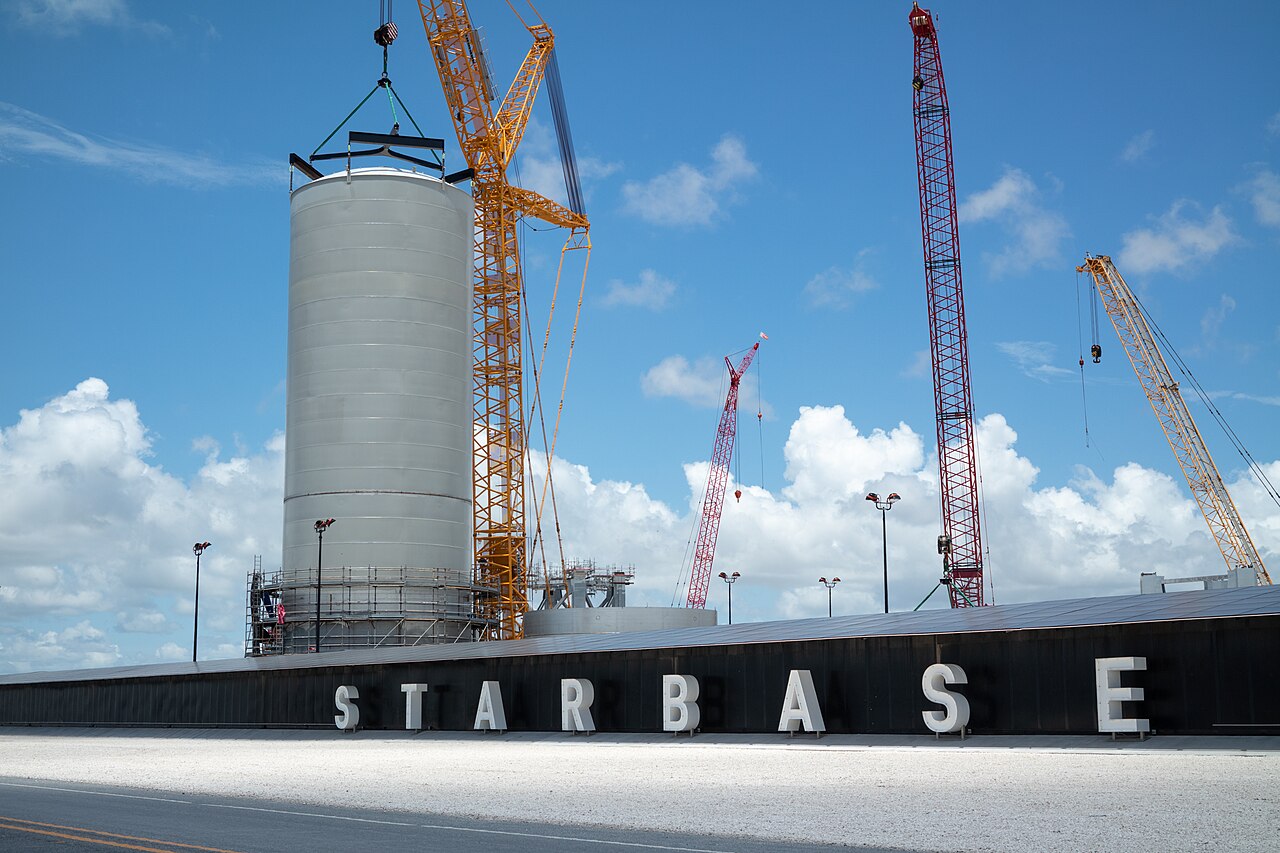
Starbase


At the southernmost edge of Texas, where the Rio Grande meets the Gulf of Mexico, a new city has appeared on the map: Starbase.
The name suggests launch, destiny, frontier. It evokes science fiction and national ambition. But before rockets rose from this coastline—before Starbase was named and incorporated—this land was known as Boca Chica. And long before that, it was part of the ancestral homeland of the Esto’k Gna, known today as the Carrizo Comecrudo Tribe of Texas.
For thousands of years, this coastal region was part of a living cultural and ecological system shaped by Indigenous presence. The ancestors of the Carrizo Comecrudo foraged, fished, and hunted throughout the river delta. Oral histories and historical documentation record massacres of Indigenous people in the region during Spanish colonial incursions. The dunes and tidal flats are sacred lands, layered with memory.
In May 2025, after years of land acquisition and industrial buildout by Elon Musk’s SpaceX, residents voted 212–6 to incorporate Starbase as an official municipality—an electorate composed almost entirely of SpaceX employees. The move formalized what was already functionally true: this area had been restructured as a company town, purpose-built to support a private aerospace corporation. Roads, utilities, and civic infrastructure are oriented toward launch schedules and corporate timelines.
The incorporation of Starbase is a new entry in an old practice. Empires claimed land with flags and forts; chartered companies governed colonies; corporations built company towns. Starbase goes further: the corporation does not just run the town, it is the municipality—chartered and vested with public authority. The renaming of Boca Chica to Starbase is not merely symbolic. It names a new jurisdiction, fundamentally shifting how the land is used, and to what end.
The renaming also reshapes the story the place tells about itself. To the Esto’k Gna, the mouth of the river is Ya kekla’xpapau (“birth place”). In Spanish it became Boca Chica (“small mouth”)—a coastal geography shaped by tides. Starbase names a platform for leaving the planet. It directs attention skyward—toward Mars, toward the spectacle of liftoff, toward a future framed as escape. What it leaves out is the ground: the wetlands impacted by repeated launches, the wildlife corridors disrupted, the sacred and historical landscapes subordinated to private profit and off-world ambitions.
The Carrizo Comecrudo Tribe has repeatedly objected to development in the area, citing both environmental and cultural harm. Yet federal and state regulatory frameworks have largely treated the land as industrial coastline rather than as culturally significant terrain. Even the wildlife protections that do apply are waived when they conflict with launch operations.
Where nineteenth-century colonial expansion moved west across the continent, twenty-first-century expansion sets its sights on space. But if the destination has changed, the frontier logic hasn’t; it remains tethered to land acquisition, resource extraction, and the sidelining of Indigenous sovereignty. And the older frontier is still here. Starbase sits within a broader geography of militarization and border enforcement: just miles away, the U.S.–Mexico border wall cuts through ecosystems and communities. The region was already marked by layered regimes of control and surveillance—the addition of a privately-governed launch city extends that architecture of power.
In the official story, Starbase is a triumph of ingenuity and a launchpad for humanity’s future. But seen from the ground, it looks like something older: a familiar pattern of claiming and renaming, of dispossession couched in the language of progress. Strip away that framing, and Starbase reveals how a trillionaire’s fantasy of escape to Mars reorganizes life and land here on Earth—and whose histories and ongoing presence get erased so a single future can look inevitable.