
FEATURE
Welcome to He Sapa. You’re on Stolen Land.

SHARE


On July 3, 2026, speaking at Mount Rushmore in He Sapa—the Black Hills—President Trump condemned the assertion that “we live on stolen land”, warning that those who teach this history are “slandering our past” and “attacking our future.” The White House reinforced that message in a 162-page report attacking the Smithsonian for its “repeated claim” that the United States rests on stolen land.
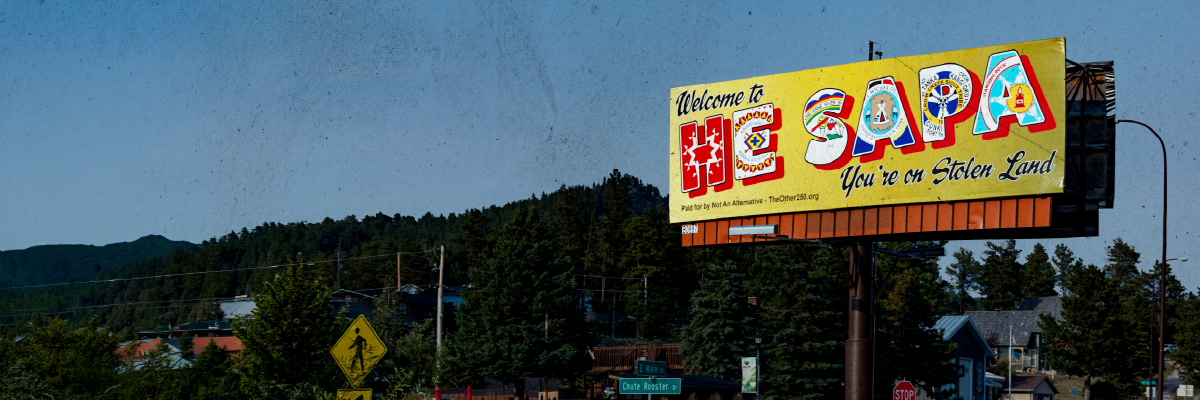
A few weeks later, a series of billboards appeared across He Sapa with a response:
“Welcome to He Sapa. You’re on Stolen Land.”
Six billboard placements, running from July 23 through October 11, 2026, bring that message into a tourism landscape that draws millions of visitors each year. The artwork was designed by Oglala Lakota artist Marty Two Bulls Jr. and commissioned by The Natural History Museum as part of Words Are Monuments.
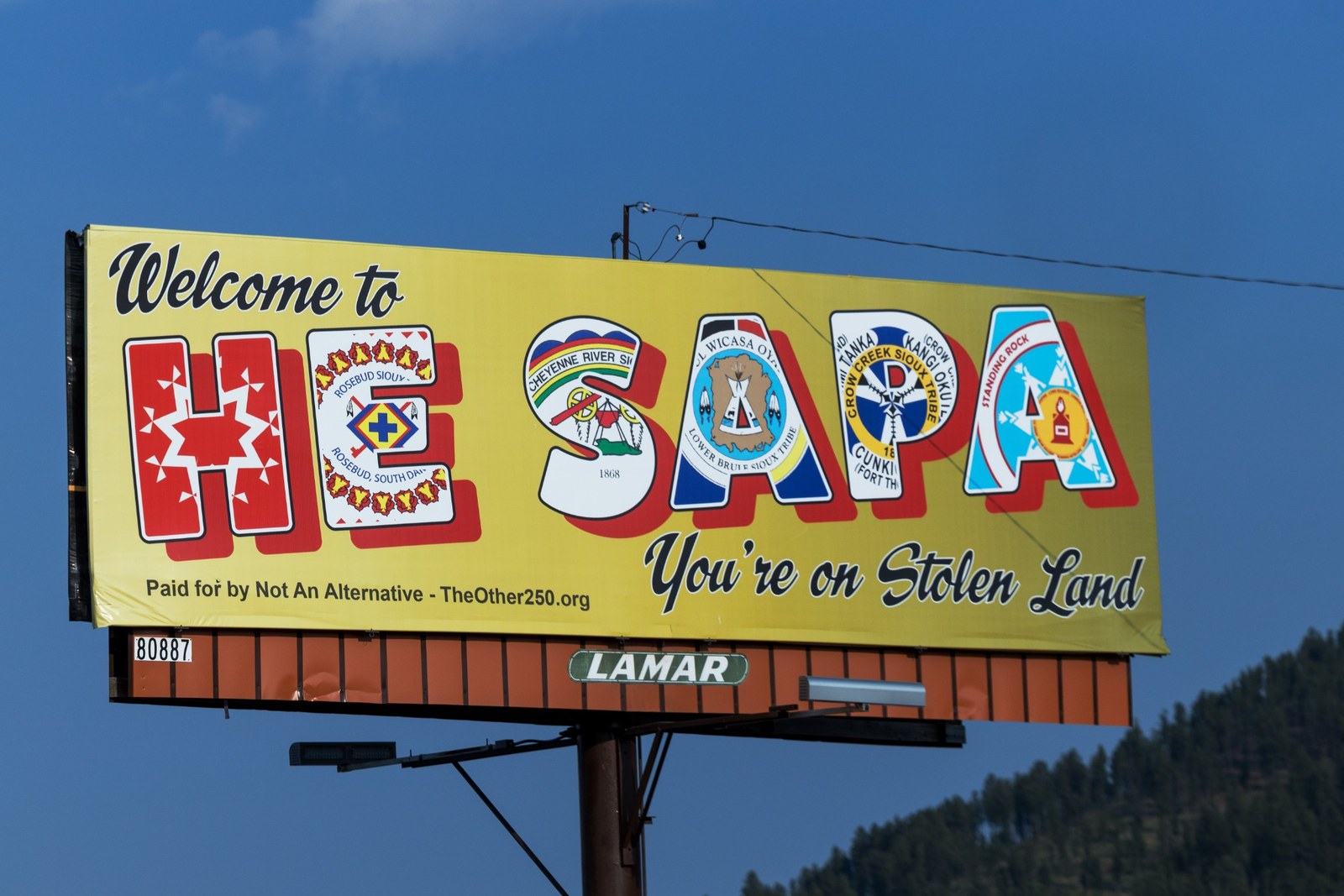 Photo: Angel White Eyes
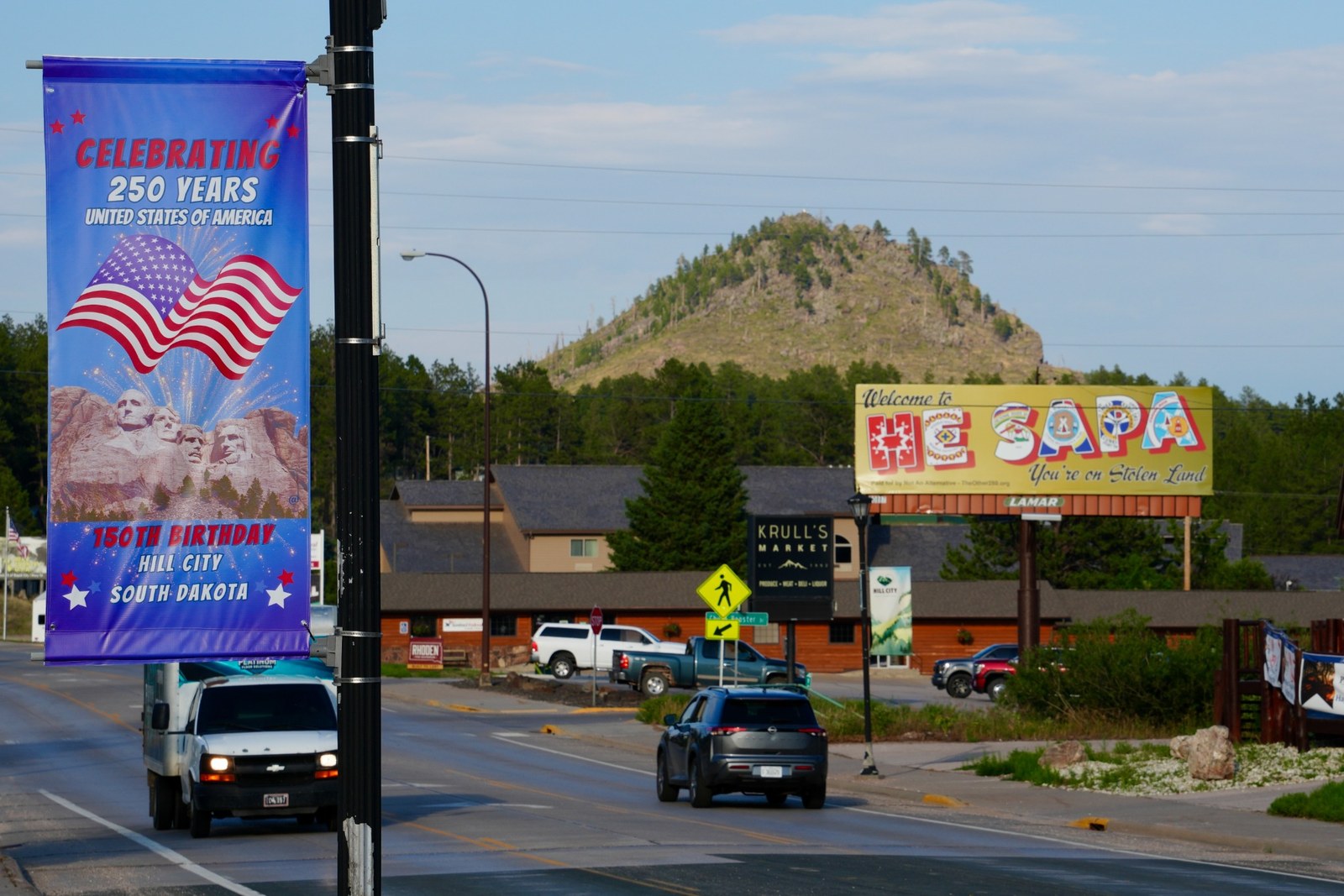
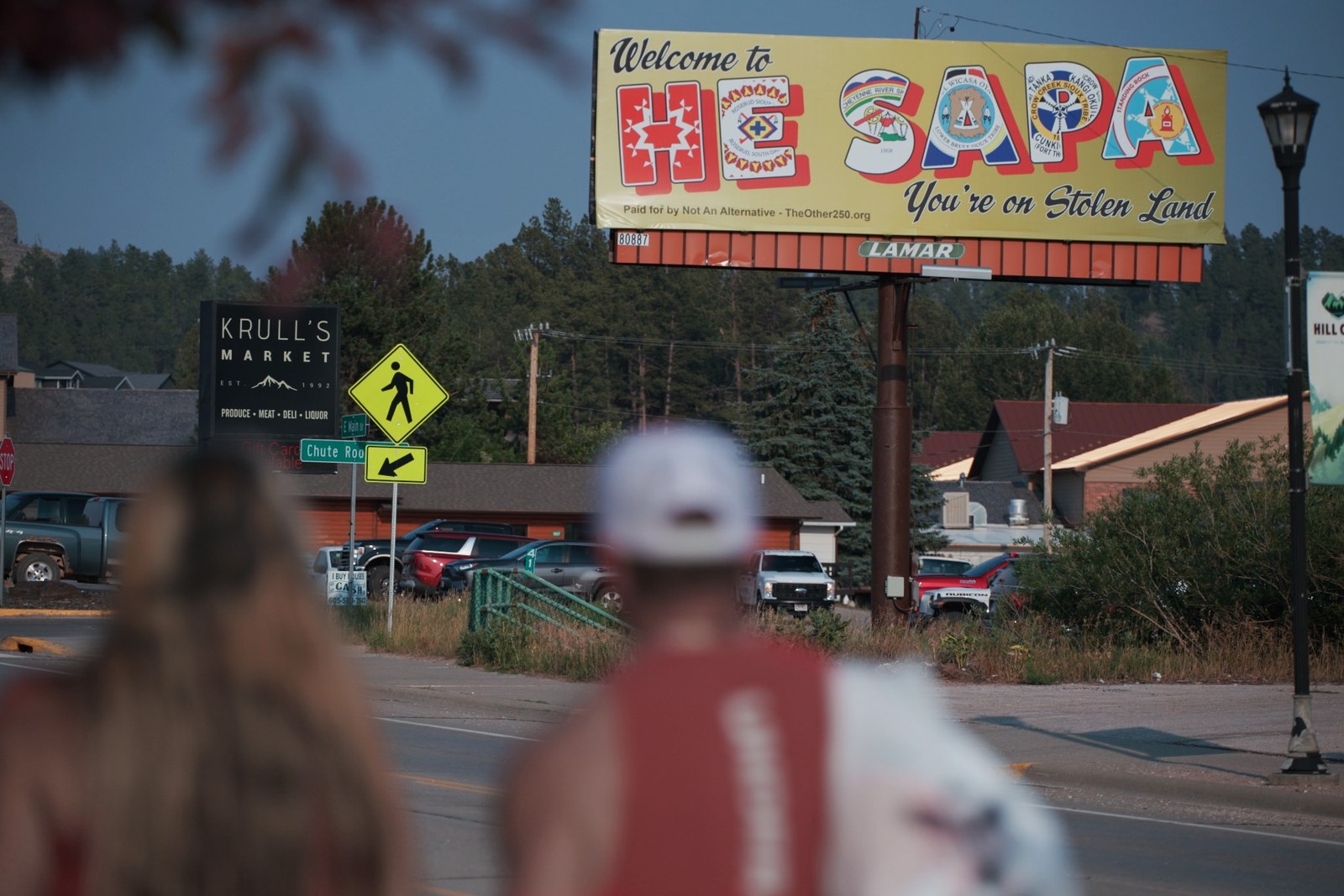
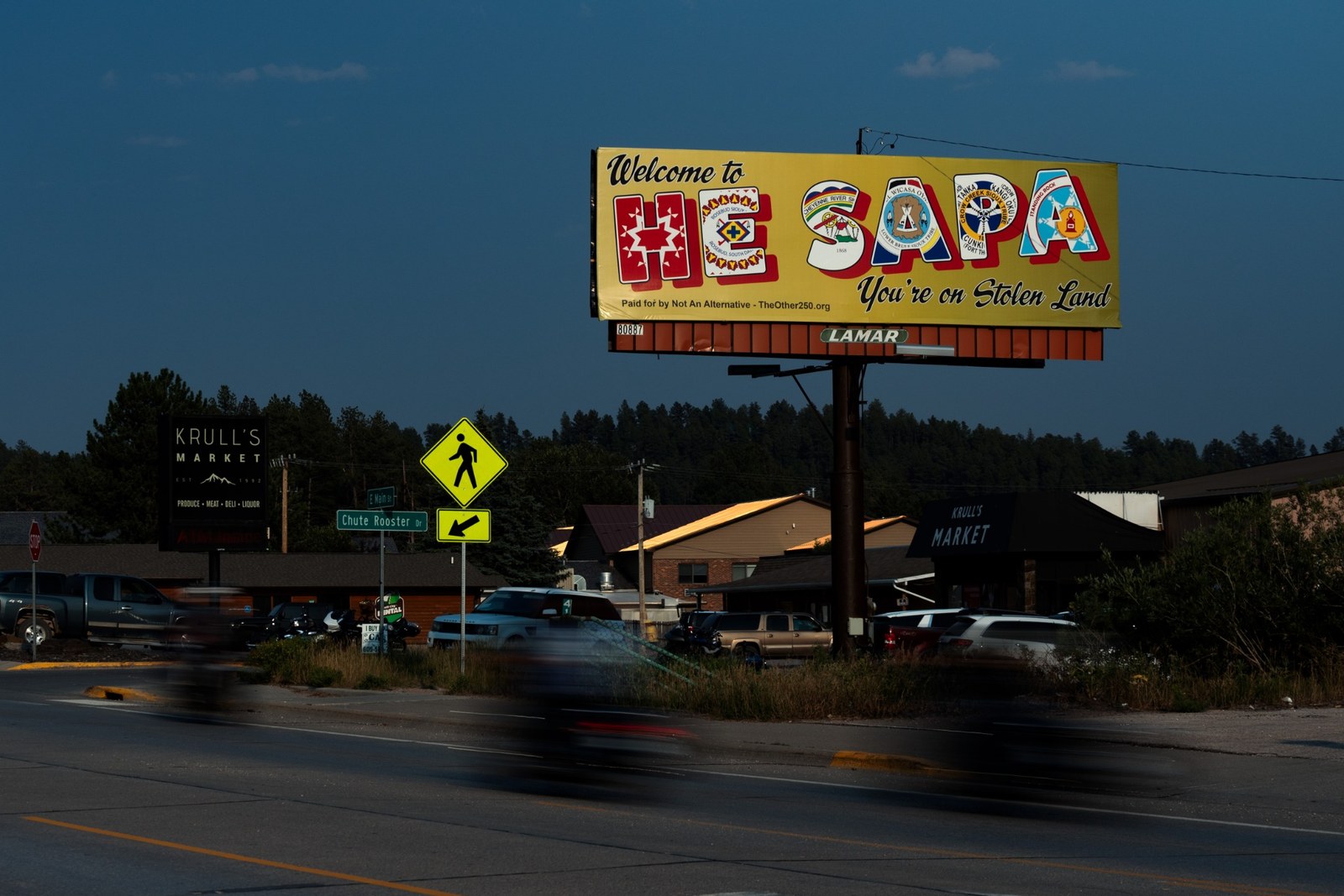
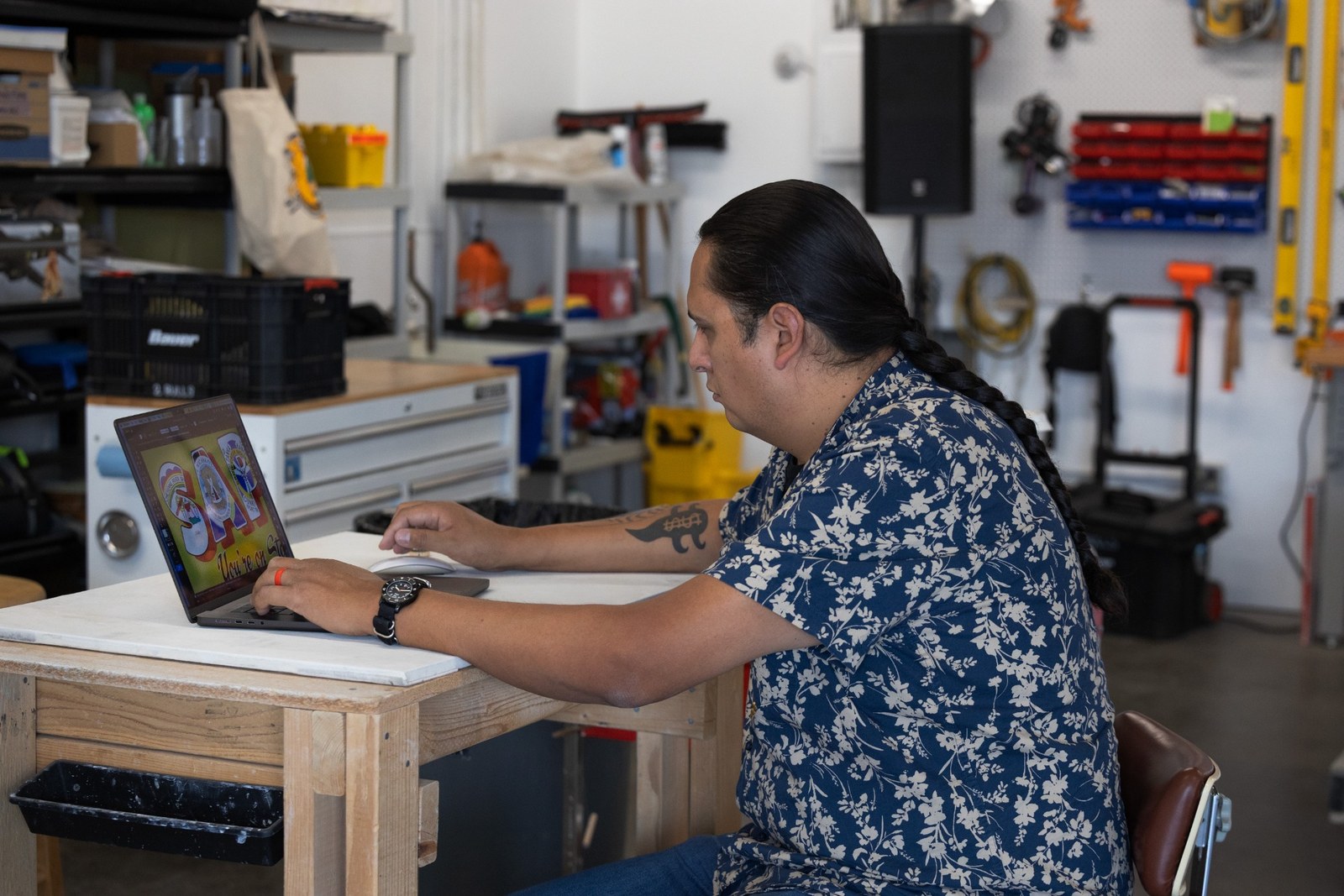
Each billboard directs viewers to a He Sapa essay authored by Oglala Lakota organizer Taylor Gunhammer for The Other 250, our community-sourced counter-atlas of American history told through the names on our maps.
The project asks visitors to recognize He Sapa as a sacred homeland, treaty territory, and living place whose name, stewardship, and future remain contested. The billboard directly responds to Trump’s comments, but the struggle it names is much older and larger than this administration.
A Message to Tourists Visiting He Sapa
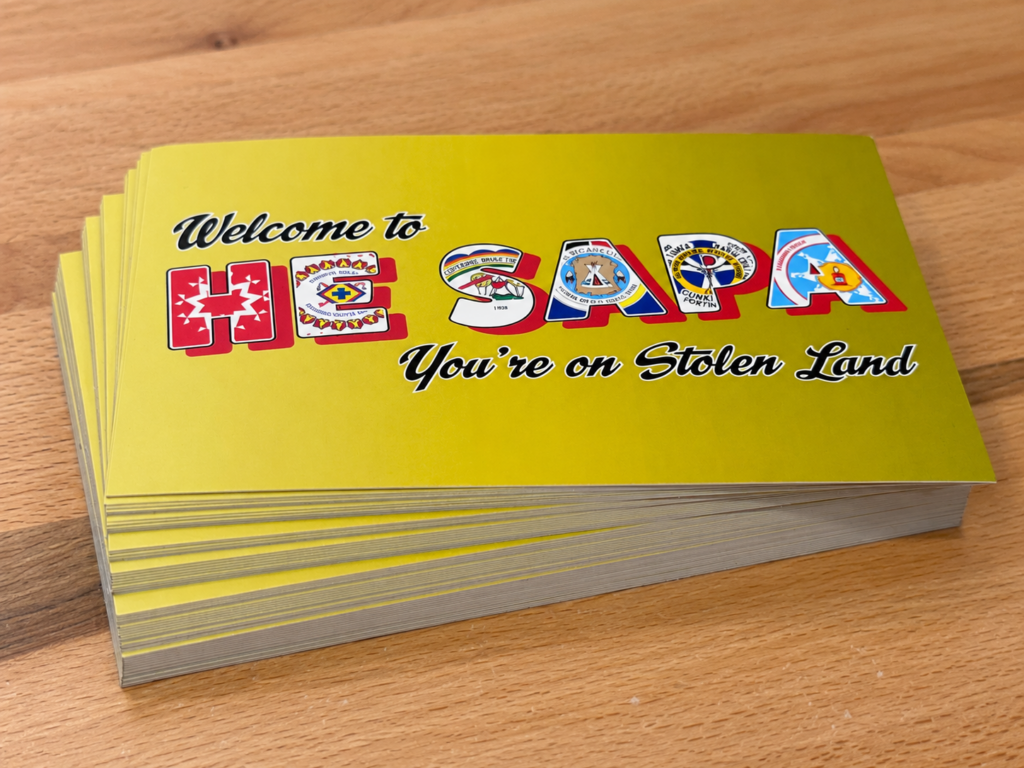
Two Bulls borrows the familiar visual language of a vintage vacation postcard. The large letters in “HE SAPA” are filled with flags of tribal nations whose treaty claims to the land remain unresolved, making tribal sovereignty visually inseparable from the greeting itself.
His first hope for the artwork is that it inspires his own community, particularly Lakota and other Indigenous young people whose voices are underrepresented in the public landscape. His second is that visitors leave with a better understanding of where they are.
“I never saw things like that growing up here, I would have thought it was cool. I wanted something familiar enough to catch a visitor’s eye—almost trick them into reading it—and I chose the word ‘welcome’ very specifically. It’s a little sarcastic, but it’s also sincere: whether your family has been here for generations or you’re just passing through, we’re all here together, and I want the billboard to act as a gateway into learning something about where you are.”
— Marty Two Bulls Jr.
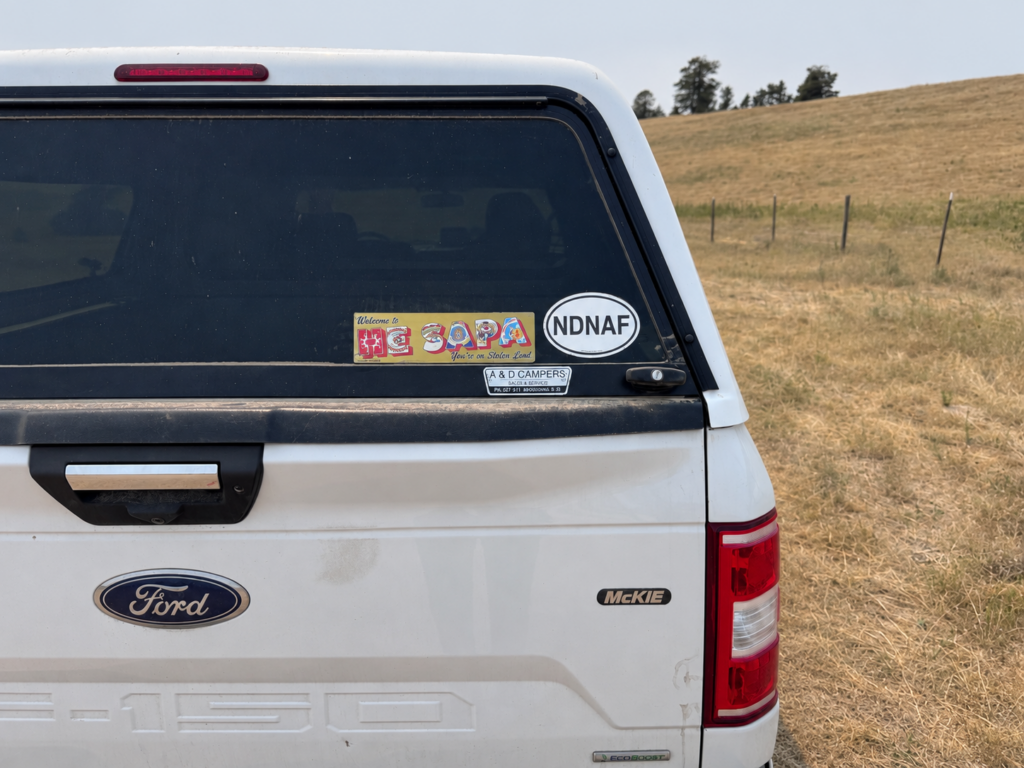
Postcards and bumper stickers carry the message beyond the billboard sites. On the postcard’s reverse, a short history explains the treaty and land claim behind the declaration.
Why “Stolen Land”
The words “stolen land” are not metaphorical: they point to a specific treaty and an unresolved land claim.
The 1868 Fort Laramie Treaty included He Sapa within lands set apart for the “absolute and undisturbed use and occupation” of the Oceti Sakowin, referred to in the treaty as the Sioux Nation. In 1874, a U.S. military expedition led by George Armstrong Custer reported gold, and miners flooded the region. The United States demanded the land, and when Lakota leaders refused to sell, seized it through military force and congressional action.
The seizure opened He Sapa to mining. Later, the faces of four U.S. presidents were carved into the mountain now called Mount Rushmore. The setting of Trump’s July 3rd speech was itself a monument to the dispossession he denied.
In 1980, the U.S. Supreme Court affirmed a monetary award for the unconstitutional taking of the Black Hills. The tribes of the Oceti Sakowin have refused to accept the money, maintaining that He Sapa was never for sale. The land has never been returned, and mining and mineral exploration continue to threaten it.
Sacred Land, Living Struggle
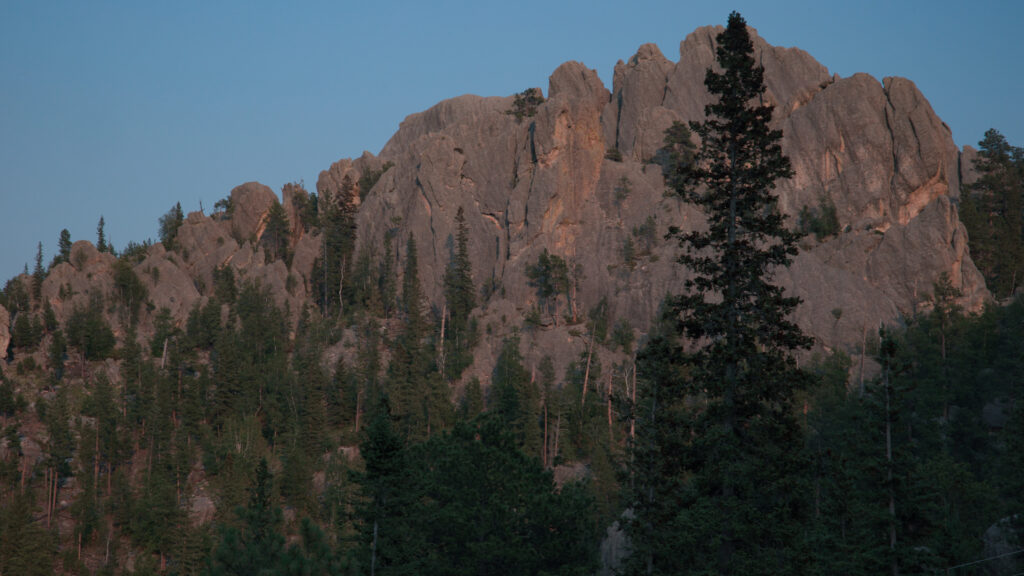
For Taylor Gunhammer, an Oglala Lakota writer, artist, and community organizer, He Sapa must first be understood as holy land. It is the ancestral homeland of the Oceti Sakowin and the heart of their stories of origin: a place of prayer, ceremony, burial, and gathering food and medicine. These relationships have continued for thousands of years.
“We are this land. It is made now of the bones of our relatives. … It is us, and what happens to it happens to us.”
— Taylor Gunhammer
Gold catalyzed the nineteenth-century invasion of He Sapa, and extraction remains central to the conflict today. Uranium, graphite, rare-earth, and other mining operations threaten sacred places, cultural sites, and the waters that sustain communities throughout the region. The struggle over He Sapa concerns who determines how this land is used—and whether it is treated as a living homeland or a source of commodities.
At Pe’Sla, tribal nations and land defenders successfully challenged a graphite exploration project approved by the U.S. Forest Service in 2026. Ceremony, organizing, lawsuits, and an occupation of active drill pads helped secure the company’s withdrawal of its drilling plan in May. At Craven Canyon, communities are fighting to protect ancient rock art and sacred sites, which sit in the crosshairs of a proposed uranium drilling project that goes by the name October Jinx.
These fights build on generations of resistance to extraction, some resulting in major victories for the tribes. Tribal and community advocacy helped secure twenty years of protection from new mineral entry around Pactola Reservoir and Rapid Creek, waters that supply Rapid City and surrounding communities. Such victories defend the places where cultural life continues and the water on which everyone depends.
A Name is a Beginning
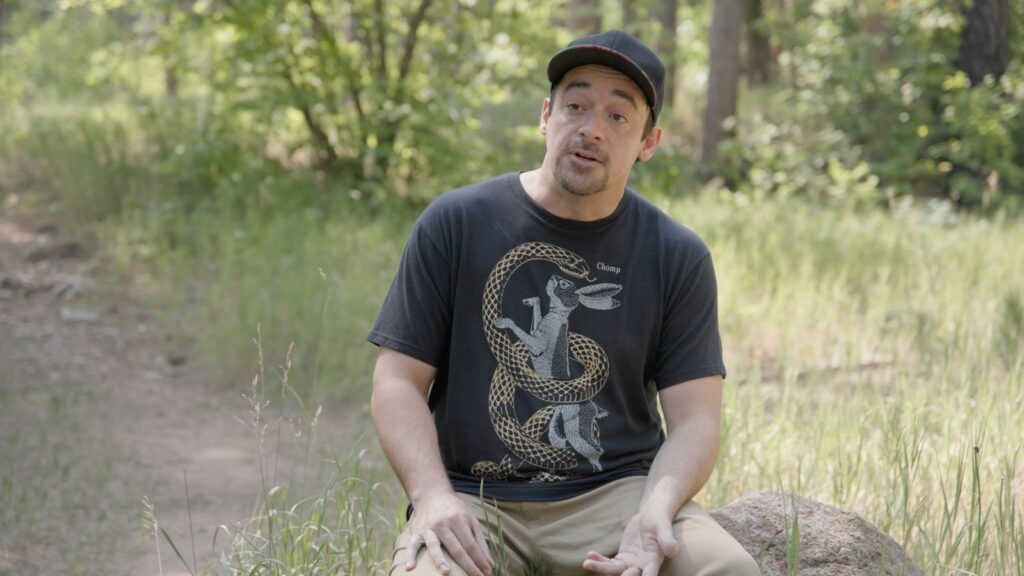
“The name of a place, the acknowledgement of the history of a place, is a beginning,” Gunhammer says.
In his essay for The Other 250, he proposes a concrete step: legally changing the name of Black Hills National Forest to Hesapa National Forest. Restoring the Lakota name would publicly recognize the land’s sacred significance and the people whose relationship to it long predates the United States. For Gunhammer, that recognition begins a larger journey toward justice and Indigenous land stewardship.
This is the kind of work Words Are Monuments supports. Launched by The Natural History Museum in 2022, the initiative examines how place-names commemorate particular histories, erase others, and assert claims to land and governance. It supports community efforts to restore or reimagine the names of historic and sacred places as one step toward Indigenous co-governance, stewardship, and Land Back.
The Other 250 brings those struggles together in a growing counter-atlas. The billboard carries one of its stories back onto the land, putting a Lakota name and an unresolved claim into public view along the region’s tourist routes.
Gunhammer connects the sacred land, treaty history, and continuing threat of extraction to a future grounded in Indigenous stewardship.
Read his full essay, alongside his entries on Pe’Sla and Craven Canyon, and explore the accompanying photographs and resources.
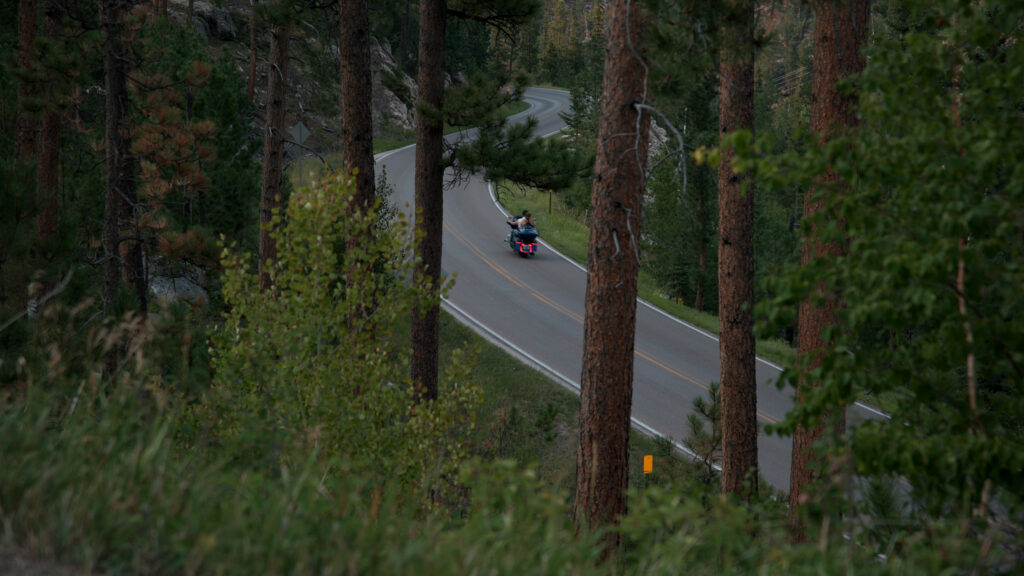
From Acknowledgement to Return
The tribes have refused compensation because their demand is for the return of He Sapa itself. In a June 2026 announcement, NDN Collective reported that all nine tribal nations in South Dakota had passed resolutions supporting the development of federal legislation to return federally held lands in the Black Hills to the Great Sioux Nation.
The framework described in the announcement was still in an early drafting stage. It concerns federal lands, excludes private property, and would not settle or otherwise dispose of claims under the 1868 treaty. It would return land and management authority to tribal nations to protect sacred sites, cultural life, and clean water.
For Madonna Thunder Hawk, an Oohenumpa Lakota organizer and co-founder of the Warrior Women Project, this work continues a lifetime of defending He Sapa. As she said in NDN Collective’s announcement: “We love our land, and will continue defending it – from Pe’ Sla to Craven Canyon and beyond.”
Join the Conversation
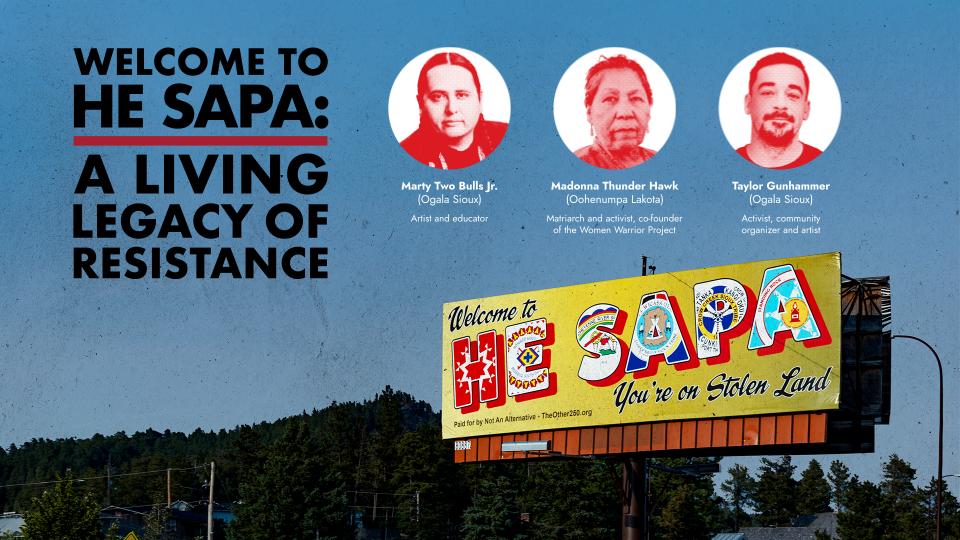
Virtual Roundtable | Friday, October 9 | 2pm ET / 11am PT
Read the full event description and register.

Held in conjunction with the billboard campaign, this conversation brings together Lakota artists, activists, and knowledge-holders to situate present-day mining struggles within generations of Indigenous-led resistance to extraction and dispossession in He Sapa. The speakers will explore how art, organizing, direct action, and intergenerational knowledge carry histories of resistance into the ongoing work to reclaim, protect, and steward the land for future generations.
SPEAKERS
Marty Two Bulls Jr. (Oglala Sioux)
Interdisciplinary artist, educator, curator, and an inaugural Artist Laureate of the Oglala Sioux Tribe
Madonna Thunder Hawk (Oohenumpa Lakota)
Matriarch, American Indian Movement activist, and co-founder of Women of All Red Nations and Warrior Women Project
Taylor Gunhammer (Oglala Sioux)
Activist, community organizer, artist, and contributor to The Other 250 counter-atlas
Learn More
- NDN Collective — Indigenous-led organizing to defend sacred places, protect water, and advance land return.
- Warrior Women Project — Oral histories and films documenting Indigenous women’s activism across generations.
- Black Hills Clean Water Alliance — Updates and ways to get involved in protecting He Sapa from mining and mineral exploration.
- Taylor Gunhammer in The Other 250 — Essays on Hesapa, Pe’ Sla, and Craven Canyon, with photographs and further reading.
- The 1868 Fort Laramie Treaty — Read the treaty and its guarantee of “absolute and undisturbed use and occupation” at the National Archives.
- United States v. Sioux Nation of Indians (1980) — Read the Supreme Court decision on the taking of the Black Hills.
