Share


“Part II: Naming American Greatness” surveyed some of the many place name changes ordered or proposed by President Trump during the early phase of his second term. “Part III: Place Names in the War on Woke” turns to the cultural dimensions of this renaming campaign, examining how place-naming functions within the far right’s so-called “War on Woke.”
—
After returning to office, the Trump Administration moved quickly not only to “undo” the renaming initiatives shepherded by the Department of the Interior under President Biden, but also to launch an aggressive renaming campaign of its own—one premised on reinstating a vision of “American Greatness” that it claimed had been eroded in previous years.
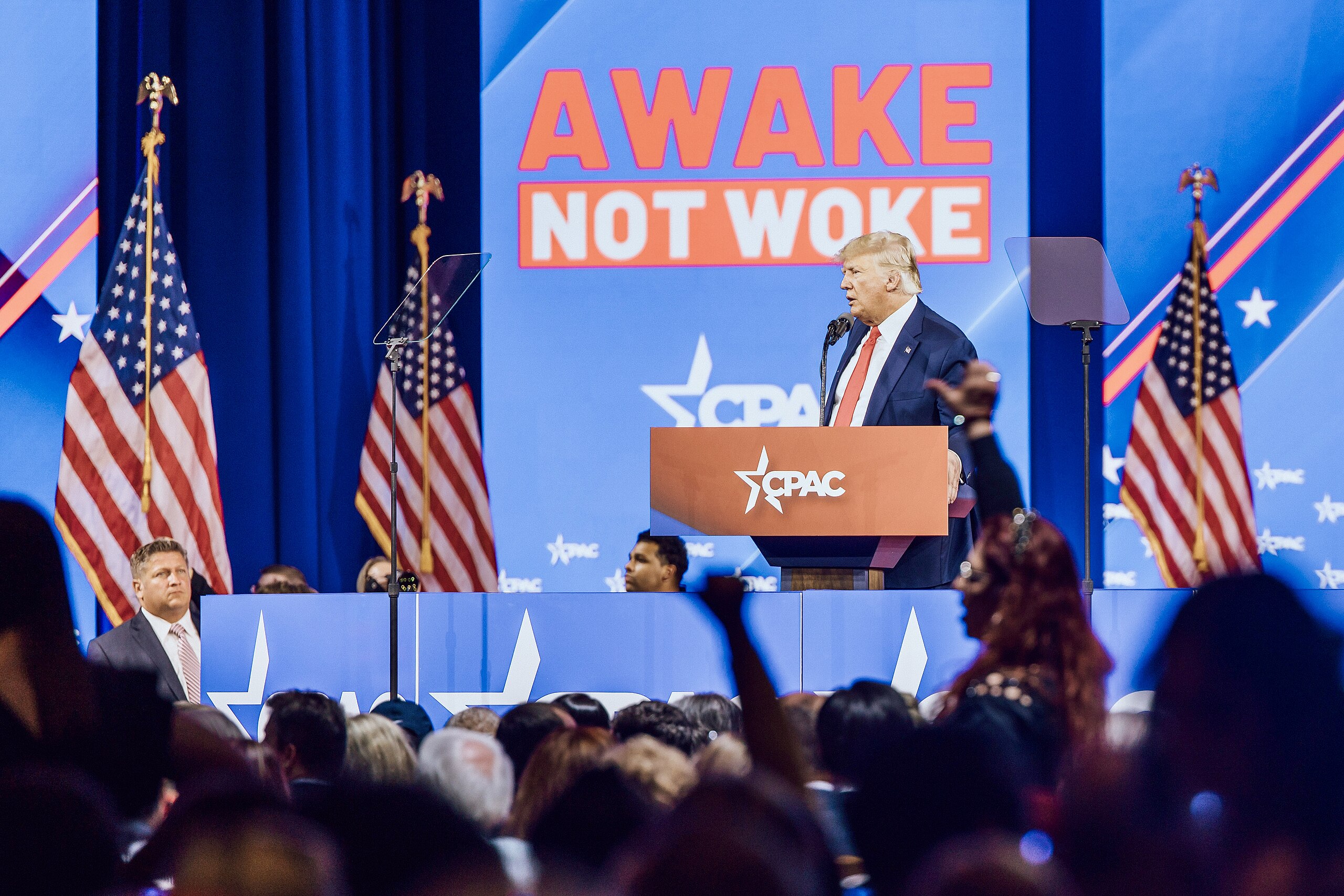
Renaming places is a central element of the Trump Administration’s broader “War on Woke”: an ambitious and coordinated response to the so-called “revisionist movement” that has destabilized the myth of American greatness in recent years by recasting the nation’s “unparalleled legacy of advancing liberty, individual rights, and human happiness … as inherently racist, sexist, oppressive, or otherwise irredeemably flawed.”
As part of this culture war, the Trump Administration has targeted a wide range of public institutions, including state museums and libraries, research funding bodies, universities, public schools, and national parks and monuments. Trump has argued that these state-funded institutions and infrastructures have colluded in promoting a “divisive, race-centered ideology” that has corroded the national morale–producing, on the one side, a noisy minority of “illegals,” “commies,” and “animals,” and on the other, a silent majority of forgotten heroes, who, left behind by an economy that was destroyed by lax borders and free trade, have every reason to feel aggrieved, victimized, resentful and betrayed.
Trump’s so-called “War on Woke” offers the latter an image of strength to rally behind. As political theorist Jodi Dean explains, it “invites people to identify with the strong by punching down and attacking the weak just like the rich boss leaders do,” ultimately serving to “redirect popular anger away from wealth holders and toward others who can be victimized, hated, excluded, and killed.” In this sense, the “War on Woke” functions not merely as a defensive measure, but as a pre-emptive strike against the conditions necessary for working-class solidarity—relieving pressure on the ruling class by sewing division among the people.
As a wrench in the works of class consciousness, Trump’s “anti-woke” crusade draws a new line between “us” and “them,” mobilizing popular fear and anger against a scapegoated other. In this sense, it performs the historical function of propaganda, which is not merely a vehicle for deception, persuasion, or communication. Rather, as artist and theorist Jonas Staal helpfully defines, propaganda is a “performance of power” that aims, fundamentally, to “construct reality itself.”
Renaming places is one element of this arsenal. By intervening in the social, bureaucratic, and institutional frameworks that shape everyday life, Trump’s renaming orders work to impose a xenophobic and imperial vision onto the landscape. Most concretely, they operate through the federal register of geographic names—one of the databases used by platforms like Google Maps—literally altering the coordinates through which people navigate space and place. In doing so, they leave the stamp of Trump’s worldview (and his authority to unilaterally impose it) on the everyday tools people rely on to move through the world.
For Ojibwe geographer Niiokamigaabaw Deondre Smiles, renaming is fundamentally an assertion of domination and control over both territory and the people who occupy it:
“Renaming is saying, ‘Now that we’ve conquered you, we can remake this space into something that’s more beneficial to us.’ . . . It’s about control.”
Trump is far from the first authoritarian leader to recognize that place-names can be mobilized to assert control, reinforce social divisions, and legitimize contested claims to land. From Israel’s longstanding policy of erasing Arabic place names in Palestinian territories to the Bharatiya Janata Party’s efforts to “swap names that reflect Muslim heritage for Hinducentric ones” across India, fascist regimes have long used renaming as a ritual for collective belonging and banishment–of defining who is in and who is out.
If the Trump Administration’s renaming program were merely symbolic–equal and opposite to the Biden Administration’s effort to swap derogatory place names with benign alternatives–it might be critiqued on similar grounds. But for Trump, renaming is not just an exercise in ideological warfare. While many proposals come off as provocations or spectacles, even the most outlandish among them—from “Red White and Blueland” to “Gaza Trump Riviera”—are not simply offensive. They serve as attention-grabbing headlines for the President’s nightmarish vision for a new Wild West.
Continued in “Part IV: Re-opening the Frontier.”